Food UGC Strategy
Organic vs paid food creative: what changes in the first three seconds
Pantry Social Studio · June 5, 2026 · Updated June 23, 2026 · 6 min read
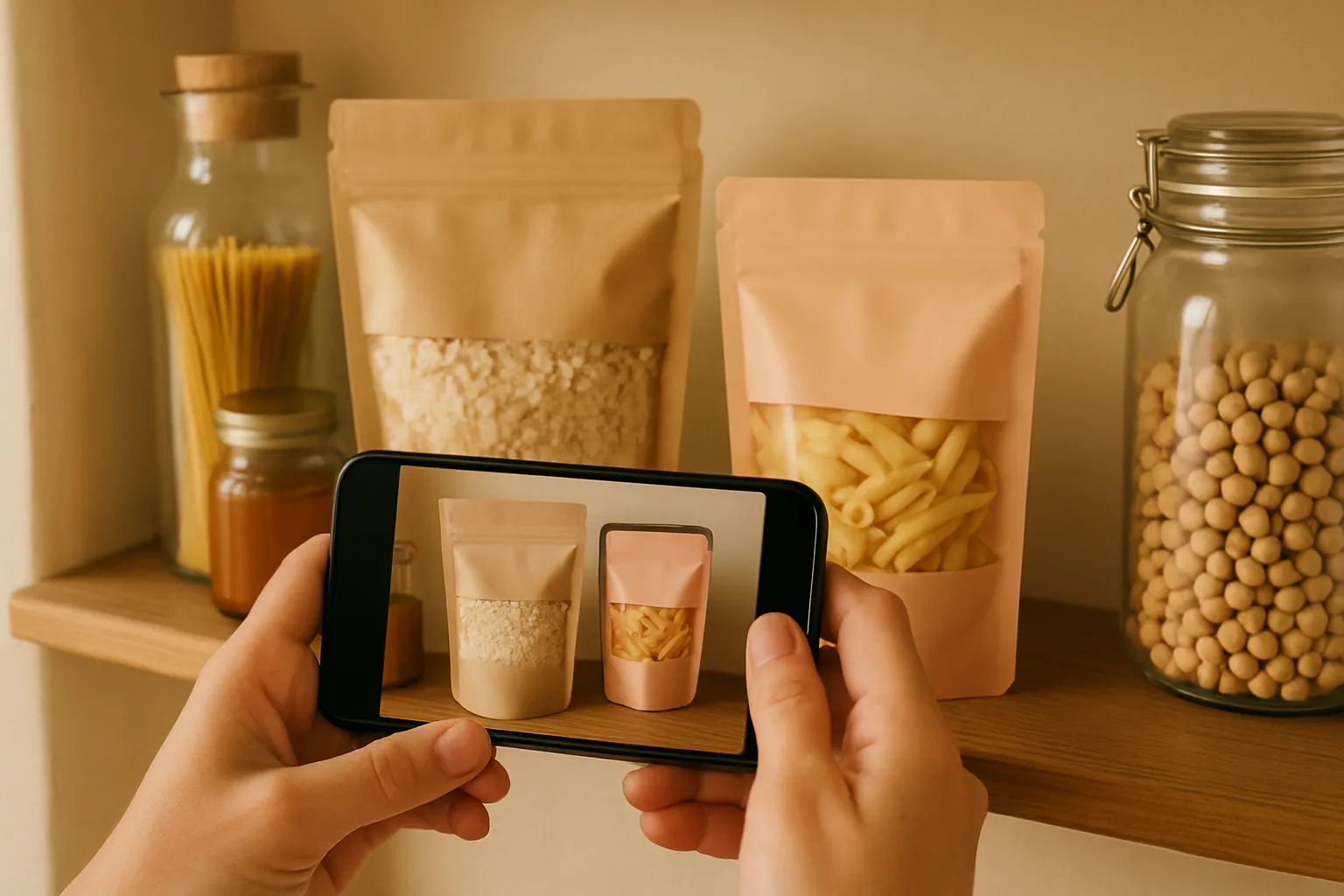
Organic and paid food creative share the same goal in the first three seconds — earn attention — but they get there differently. Organic hooks feel native and curious; paid hooks lead with a problem or claim and interrupt the scroll.
The difference between organic vs paid food creative shows up fastest in the first three seconds. A feed scroll and an ad break behave differently, so the same plate of food needs a different opening depending on where it lands. Organic content earns its way into the feed by feeling native and curious; paid content has to stop a scroll it interrupted, which means leading with a problem, a claim, or a pattern break. The food is the same. The hook is not. Below is how we think about briefing and testing those openings so a brand gets both organic and paid social pulling their weight, instead of one polished edit stretched thin across two very different jobs.
Why the first three seconds decide the outcome
Most viewers decide whether to keep watching before the second beat of your audio lands. That window is short, and it is shorter on paid, where the viewer didn’t choose your brand — the placement did. Everything after the hook only matters if the hook bought you the time. For food content specifically, the first frame is doing double duty: it has to read as appetizing and as worth pausing for, often before any words are spoken. Get the open right and the rest of the edit gets a fair hearing; get it wrong and your best ingredient shot never gets seen.
What actually changes between organic and paid food creative
Organic lives inside a feed the viewer is already scrolling for fun, so it rewards content that looks like it belongs — a real kitchen, a real hand, a real bite. Paid sits in a slot the viewer didn’t ask for, so it rewards content that earns the interruption: a sharper claim, a clearer problem, a faster reveal. The production can overlap, but the framing of the first three seconds diverges. Treating one master edit as both organic and paid-ready creative usually means it’s mediocre at both. We brief them as cousins, not clones, and we keep a clear menu of openings to draw from — see our CPG creative testing menu for how that gets structured.
The organic hook: native, curious, relatable
An organic hook works because it doesn’t feel like advertising. It opens mid-moment — someone already cooking, already snacking, already mid-thought — and lets curiosity do the pulling. The creator’s voice carries it, the lighting looks like a real apartment, and the product shows up because it belongs in the scene, not because a script demanded it. The goal is for a viewer to forget, briefly, that anyone is selling anything. Our food UGC examples lean heavily on this register: low-gloss, high-trust openings that feel like a friend filming their counter.
The paid hook: problem-first, claim-forward, pattern interrupt
A paid hook has permission to be more direct because it has to be. It can name the problem in the first line — the sad desk lunch, the snack that never satisfies, the dinner you dreaded prepping — and promise the turn. It can lead with a claim the product can actually back. Or it can break the pattern visually: an unexpected pour, a close-up crunch, a swap that doesn’t look like the rest of the feed. The throughline is that paid social hooks state the stakes early instead of meandering toward them. You’re renting attention, so you spend it up front.
Food-specific hooks that earn attention
Some openings are built for food and translate across both organic and paid with small adjustments. These are the ones we reach for most when we want scroll-stopping food content that still respects the product:
- The sensory open: steam, sizzle, a pour, a pull-apart, or the first crunch in the opening frame — sound and texture before any words.
- The swap: replacing a familiar habit with the product (the afternoon vending machine vs. your snack), shown as a side-by-side or a quick before/after.
- The trick: a small, specific tip the product enables — a faster prep, a better topping, a smarter pairing — framed as something worth saving.
- The honest reaction: an unscripted first-bite face that reads as real, which works especially well as a native organic open.
- The problem-state cold open: the soggy, the bland, the boring — named in one line, then resolved by the product.
How to brief the first three seconds
A good brief treats the open as its own deliverable, not an afterthought of the full edit. We write the first three seconds explicitly — the frame, the line, the sound — and we write two or three versions so there’s something to test. A tight brief also tells the creator what the product is allowed to claim and what it isn’t, which keeps paid versions usable. If you want a structure to copy, our snack brand UGC brief checklist breaks this down field by field.
- Specify the opening frame and the opening line separately — don’t leave the hook to chance in the edit.
- Write one organic-native open and one paid-direct open from the same shoot.
- Name the problem or curiosity the hook is built around so the creator stays on point.
- Flag any claim the product can legally make, so the paid cut stays compliant.
- Ask for a few seconds of clean sensory footage (pour, crunch, steam) usable as a cold open.
Testing hooks across organic and paid
The cheapest way to learn which open works is to shoot several and let the placement tell you. Organic feeds are a low-cost lab for hooks; the ones that hold attention there are often worth promoting into paid. From there, you isolate the first three seconds as the variable and keep the body of the edit constant, so you’re measuring the hook and not the whole creative. We pull openings from a few reliable angles when we build a test slate — our one product, ten angles approach is a useful starting point for generating enough variety to learn from without reshooting endlessly.
Organic and paid don’t need separate teams — they need separate openings briefed on purpose. If you want help building hooks that hold across organic and paid social, tell us what you need and we’ll map a slate to your product.
Frequently asked questions
What’s the real difference between organic vs paid food creative?
The biggest difference is the opening. Organic content lives in a feed the viewer chose, so it works best when it feels native and curious. Paid content interrupts the feed, so it has to earn attention up front with a problem, a claim, or a clear pattern break. The food and production can overlap, but the first three seconds should be briefed differently.
Can I use the same video for both organic and paid?
You can repurpose footage, but a single master edit rarely performs as both. We recommend shooting the body once and capturing two or three different openings — one native-feeling for organic, one more direct for paid — so each version has a hook suited to its placement.
Which food hooks stop the scroll most reliably?
Sensory opens (steam, sizzle, a pour, the first crunch), the swap (replacing a familiar habit with the product), and the trick (a small, specific tip the product enables) tend to travel well across formats. Honest first-bite reactions work especially well as native organic opens.
How many hooks should we test?
Enough to learn something without reshooting endlessly — usually three to five distinct openings per concept. Keep the body of the edit constant and vary only the first three seconds, so you’re measuring the hook itself rather than the whole creative.
Does the first three seconds matter more for paid than organic?
It matters for both, but the pressure is higher on paid because the viewer didn’t choose your brand — the placement did. Organic gives you a little more room to open mid-moment, while paid usually needs to state the stakes immediately.
Written by the Pantry Social Studio team — a food-first UGC and creator studio working with grocery, snack, beverage, pantry, kitchen, and CPG brands. We brief and produce creator content for organic and paid social.
Related Pantry Notes
Food UGC Strategy
A simple creative testing menu for CPG brands
A practical menu of hooks, formats, creator archetypes, and product moments brands can test across paid and organic channels.
7 min readFor brands
Creative Formats
Food UGC Examples: Formats Grocery and CPG Brands Can Actually Use
A practical tour of food UGC examples — taste tests, recipe integrations, grocery hauls, pantry restocks, demos, and paid hooks — and what each one actually sells.
7 min readFor brands
Creator Briefs
What snack brands should include in every UGC brief
A practical checklist for briefing snack reviews, taste tests, desk lunches, pantry restocks, and paid-social product demos.
5 min readFor brands
Brands: source food-first UGC
Tell us what you need and we'll help identify creator fits by category, format, style, platform, and usage.