Seasonal Moments
Seasonal moments food brands should brief before everyone else does
Pantry Social Studio · May 30, 2026 · Updated June 23, 2026 · 8 min read
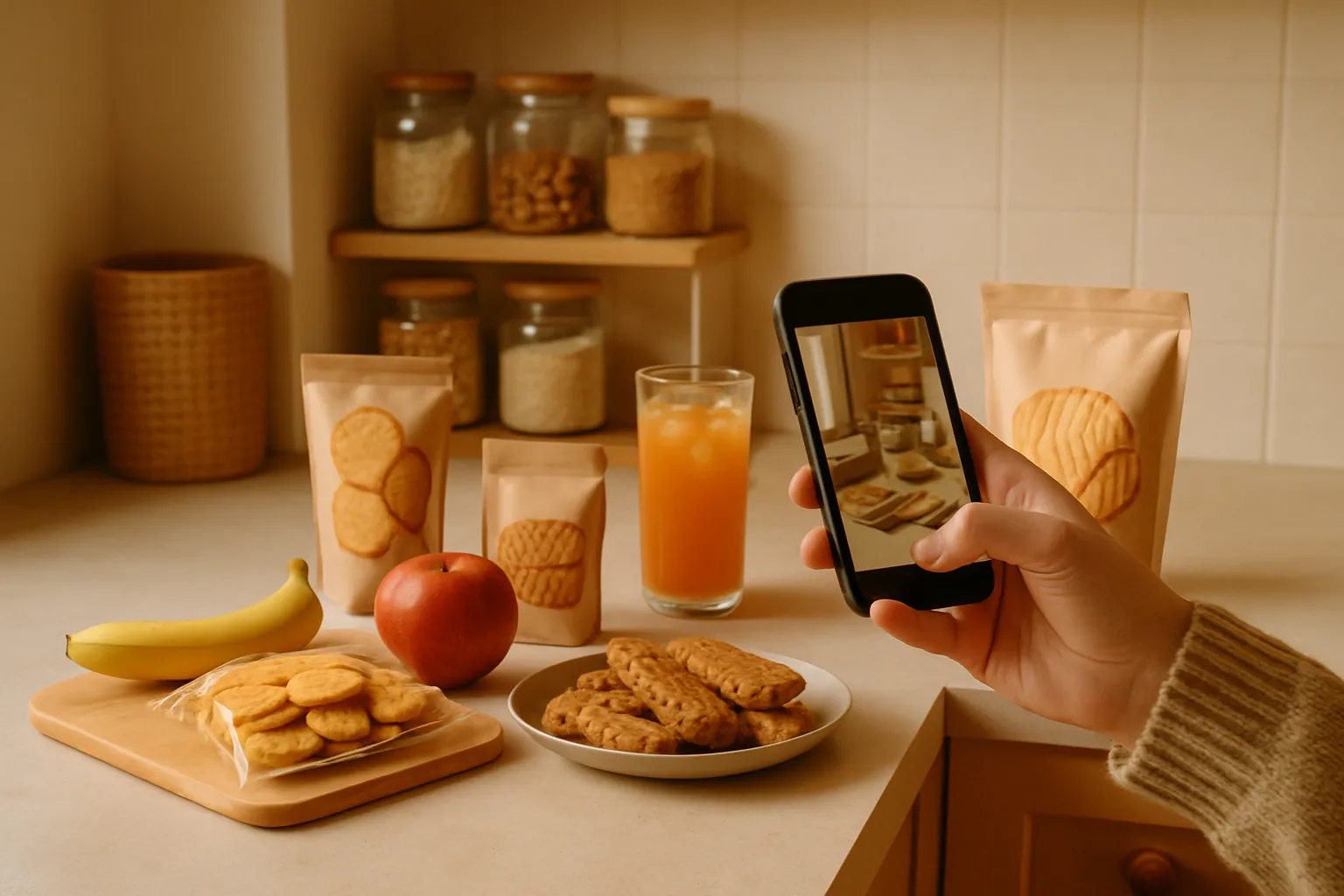
The seasonal moments food brands should brief early are the predictable ones — back-to-school, holidays, summer, and new-year resets. Brief six to twelve weeks ahead so creators can shoot in-season and you can edit, test, and have paid-ready creative live when shoppers are actually looking.
Seasonal food content planning fails for one boring reason: brands brief too late. The seasonal moments food brands should brief early are the most predictable dates on the calendar — back-to-school lunchboxes, holiday hosting, summer drinks, the new-year pantry reset — yet briefs routinely land days before the moment is already trending. The fix is simple and unglamorous: decide what you want filmed, write the brand brief, and get it to creators weeks ahead so footage is shot in-season, edited with room to spare, and ready to run as paid-ready creative when shoppers start searching and adding to cart. This guide lays out the food brand seasonal calendar, the four moments worth planning around first, and exactly how far ahead to brief each one in weeks — so your seasonal UGC is in market early instead of catching up.
Why early briefing wins seasonal content
Seasonal content has a hard deadline that most content does not: the moment passes. A back-to-school clip that goes live in late September is competing for attention that has already moved on. Early briefing buys you the one thing you cannot manufacture later — time. Time for creators to shoot in the actual season, with the right produce on the counter and the right light coming through the window. Time to review footage, request a reshoot if a hero shot misses, and cut multiple short-form formats from one shoot day. And time to test before you spend, so the variant you scale is the one that already earned attention rather than your best guess. Briefing late collapses all of that into a scramble, and the work shows it. When you plan seasonal UGC the way you'd plan a launch, you also get to brief for intent: the angles people respond to in December (hosting, gifting, crowd-pleasing) are different from the ones that land in January (reset, simple, lighter). Early briefing is what lets you match the message to the moment instead of recycling an evergreen clip and hoping it fits.
The food brand seasonal calendar (overview)
Before you brief anything, map the year as a food content calendar. Most food, snack, beverage, and pantry brands cluster around four repeatable tentpoles: late-summer back-to-school and lunchbox season; the long holiday hosting-and-gifting stretch from autumn through the new year; spring-into-summer beverages and warm-weather snacking; and the new-year pantry reset and wellness window. Around those sit smaller moments — game-day spreads, spring entertaining, regional holidays — that you can treat as bonus angles rather than anchors. The point of the overview is to see the whole year at once so you're not briefing reactively. Pick the two or three tentpoles that genuinely fit your product, then work backward from each in-market date to set a briefing deadline. If you're not sure which formats each moment calls for, our food UGC format chooser is a quick way to match a moment to a shoot style before you write the brief.
Back-to-school and lunchbox season
Back-to-school snacks are one of the most reliable food moments of the year, and one of the easiest to miss by briefing late. The buying decision happens fast and early — parents stock up in the weeks before the first day, not after — so your content needs to be live while the lunchbox is still empty. Brief creators to show real routines: the morning pack, the after-school refuel, the grab-and-go that survives a backpack. Lean into the practical angles that parents actually screenshot — portionability, no-mess formats, allergy-friendly swaps, and what fits a small container. This is a moment where a single product can stretch a long way; if you want help pulling multiple stories from one SKU, one product, ten angles is a useful companion before you write the brand brief. Aim to have footage shot while the season is genuinely in the air so the kitchens, the light, and the energy read as authentic rather than staged in the off-season.
Holiday hosting and gifting
The holiday stretch is the longest and most crowded moment on the food brand calendar, which is exactly why it rewards early briefing. There are really two jobs to brief for: hosting (the spread, the appetizer, the thing you bring) and gifting (the pantry item that looks giftable, the bundle, the stocking-filler snack). These call for different short-form formats and different on-camera energy, so treat them as separate creative tracks rather than one catch-all holiday clip. Hosting content leans warm and abundant — full tables, hands reaching in, the crowd-pleaser that disappears first. Gifting content leans tactile and considered — wrapping, the reveal, the why-this-one moment. Because the holiday window stacks several occasions close together and competition for attention peaks, you want a deep content bank, not a single hero asset. Brief early enough that you can shoot a range in one in-season block, then schedule it out across the run instead of producing piecemeal under deadline pressure.
Summer beverages and warm-weather snacking
Summer is a beverage and light-snacking moment, and it's especially unforgiving about being shot in-season. Condensation on a cold glass, real sunlight, an outdoor table, ice that actually looks cold — none of that fakes well in a studio in March. Brief creators to capture the sensory cues that make warm-weather food content work: the pour, the fizz, the first sip, the poolside or picnic setting, the easy assembly of a snack that doesn't need an oven. This is a great moment to test creative variety early, because summer attention is fragmented across a lot of competing content. Plan a small slate of variants rather than one clip, and use the early footage to learn what holds attention before you put spend behind it — our CPG creative testing menu walks through structuring that. Brief well ahead of the warm months so your creators can shoot when the season is real, and you're not staging summer out of season.
New-year pantry resets and wellness
The new-year window is a distinct moment with its own language: reset, simplify, lighter, intentional. Shoppers are restocking pantries, rethinking routines, and paying close attention to better-for-you positioning, so the angles that work in December actively backfire here. Brief for the reset mindset — the organized shelf, the simple swap, the everyday-better version of a familiar food. Wellness-leaning content rewards honesty and restraint over hype, so keep the brand brief grounded in real use: what this looks like on a normal Tuesday, not an aspirational fantasy. Because this moment arrives right on the heels of the holiday rush, it's easy to under-resource, which is exactly why you brief it early — ideally before the holiday block consumes your team. A little planning here means you transition cleanly from abundance to reset instead of going dark for the first weeks of the year, when intent is high and shoppers are genuinely open to trying something new.
How far ahead to brief each moment (lead times in weeks)
Lead times depend on how much you're shooting and whether the content is going to paid, but these are reliable defaults for short-form food UGC. Build in extra time if you need multiple creators, several formats, or a test-and-iterate cycle before spend: - Back-to-school and lunchbox season: brief six to eight weeks before the in-market date so footage is shot while the season is genuinely in the air and live before parents finish stocking up. - Holiday hosting and gifting: brief eight to twelve weeks ahead — it's the longest, most competitive window and usually needs a deeper content bank shot across one in-season block. - Summer beverages and warm-weather snacking: brief six to ten weeks ahead so creators can shoot in real warm-weather conditions, with time to test a small slate before scaling. - New-year pantry reset and wellness: brief six to eight weeks ahead, and lock it before the holiday block consumes your team so you don't go dark in early January. - Smaller moments (game day, regional holidays, spring entertaining): brief four to six weeks ahead, treated as bonus angles layered onto your main tentpoles. If this is your first structured seasonal push, the snack brand UGC brief checklist is a good way to make sure each brief is complete before it goes out.
Building a seasonal content bank you can reuse
The biggest payoff of early seasonal briefing isn't a single timely clip — it's a content bank you can draw from again. When you brief a season properly, you should walk away with more than the hero asset: alternate cuts, vertical and square versions, hook variations, b-roll, and paid-ready edits you can swap in as you learn what performs. Catalog everything by moment and angle so next year you start from a library instead of a blank page. Seasonal cues repeat — lunchboxes, holiday tables, cold summer pours, the new-year reset shelf — so well-shot, in-season footage holds value far beyond its first run, especially the timeless product shots that aren't tied to a specific date. Treat each seasonal shoot as a deposit into that bank, and your seasonal food content planning gets faster and cheaper every cycle, because you're refining a proven library rather than rebuilding from scratch. Planning a season and want a partner to handle the briefing and creators? Tell us what you need and we'll help you get food-first UGC in market early.
Frequently asked questions
What are the seasonal moments food brands should brief early?
The four most reliable are back-to-school and lunchbox season, the holiday hosting-and-gifting stretch, summer beverages and warm-weather snacking, and the new-year pantry reset and wellness window. Pick the two or three that fit your product and brief each one weeks ahead so creators can shoot in-season.
How far ahead should we brief seasonal food content?
As a default for short-form food UGC: six to eight weeks for back-to-school, eight to twelve weeks for the holidays, six to ten weeks for summer, and six to eight weeks for the new-year reset. Add time if you need multiple creators, several formats, or a test cycle before putting spend behind the content.
Why does briefing seasonal UGC early actually matter?
Seasonal content has a hard deadline because the moment passes. Briefing early gives creators time to shoot in the real season, gives you time to review and reshoot, and lets you test variants before you scale, so the work is in market when shoppers are looking rather than catching up after the peak.
Can we reuse seasonal food content from year to year?
Yes, and that's the goal. A well-briefed seasonal shoot should produce a content bank — alternate cuts, format variations, b-roll, and timeless product shots not tied to a specific date. Catalog everything by moment and angle so next year you start from a library instead of a blank page.
Should holiday hosting and gifting be one brief or two?
Treat them as two creative tracks. Hosting content leans warm and abundant — spreads, appetizers, the crowd-pleaser — while gifting content leans tactile — wrapping, the reveal, the giftable pantry item. They call for different formats and on-camera energy, so briefing them separately keeps each one sharp.
Written by the Pantry Social Studio team — a food-first UGC and creator studio working with grocery, snack, beverage, pantry, kitchen, and CPG brands. We brief and produce creator content for organic and paid social.
Related Pantry Notes
Food UGC Strategy
A simple creative testing menu for CPG brands
A practical menu of hooks, formats, creator archetypes, and product moments brands can test across paid and organic channels.
7 min readFor brands
Creative Formats
Taste test, haul, restock: which food UGC format should you use?
How to choose between creator reactions, grocery hauls, pantry restocks, product demos, and comparison videos.
6 min readFor brands
Creator Briefs
What snack brands should include in every UGC brief
A practical checklist for briefing snack reviews, taste tests, desk lunches, pantry restocks, and paid-social product demos.
5 min readFor brands
Brands: source food-first UGC
Tell us what you need and we'll help identify creator fits by category, format, style, platform, and usage.