Creative Formats
Food UGC Category Playbooks: Pantry, Cold Box, Snack, and Functional
Pantry Social Studio · June 30, 2026 · 9 min read
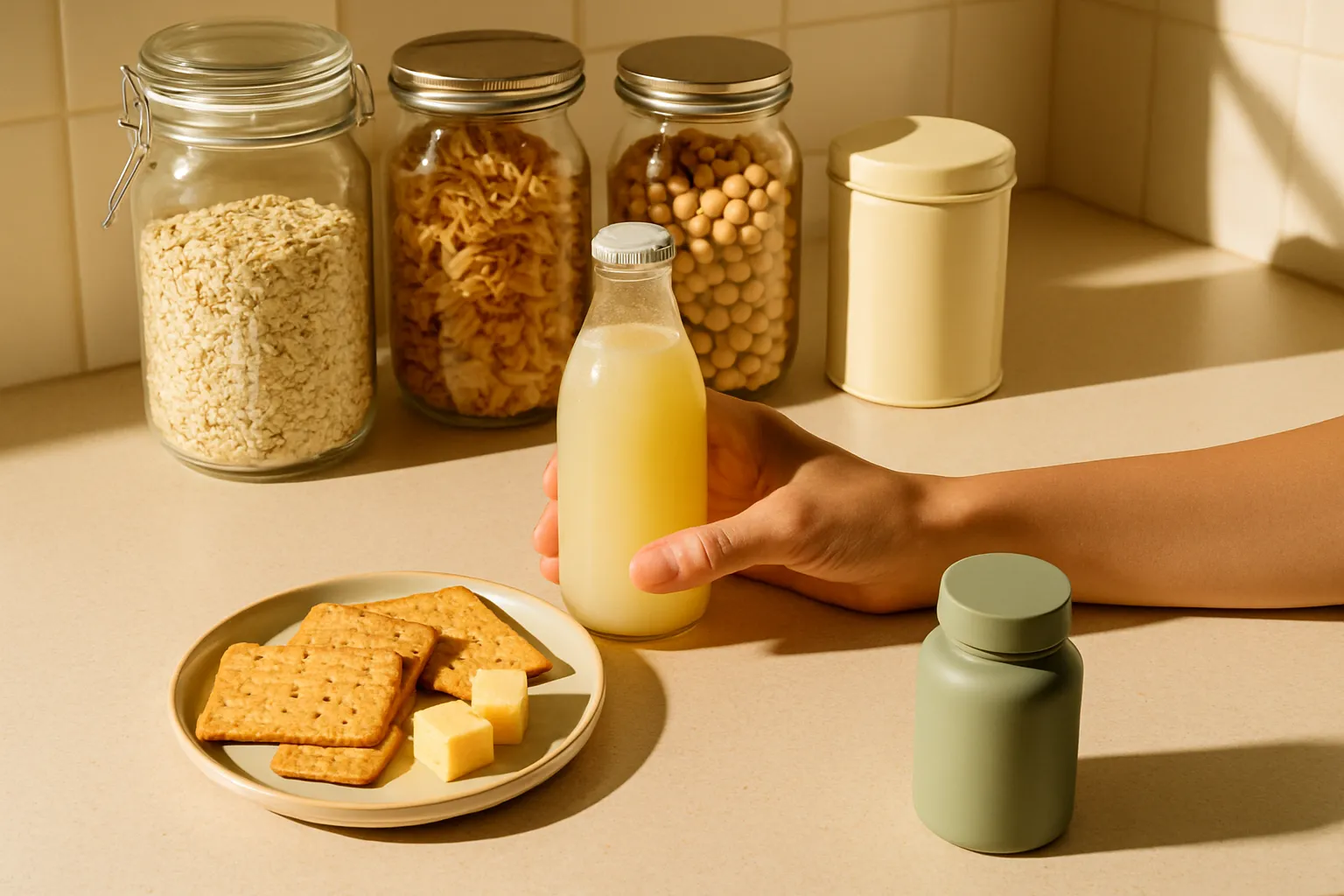
Treat ”food & beverage” as four or five distinct content problems. Match the creator brief, format, and metric to the category — pantry restock, cold-box ritual, snack plate, functional proof — and always-on retail moments tie them together.
Food UGC by category is the difference between content that looks nice and content that moves product. If you sell a shelf-stable sauce, a canned energy drink, a cracker, and a powdered supplement, you do not have one content problem — you have four. Each lives in a different part of the kitchen, gets bought for a different reason, and gets re-bought (or not) on a different clock. Yet most briefs treat ”food & beverage” as a single genre: pretty hands, soft light, a product held to camera. That approach flattens exactly the differences that make a category convert. This is our argument, and the rest of this piece is the receipts: pantry staples, cold-box RTD, impulse snacks, and functional products need distinct creator briefs, formats, and measurement. Below are the five content systems we run as playbooks, so you can match the format to what you actually sell.
Why one food playbook doesn’t work
The reason a single food playbook underperforms is that purchase behavior differs by category more than aesthetics do. A pantry staple is a considered, repeat purchase — someone stocks it, runs out, and restocks. An RTD beverage is often impulse and ritual — bought cold, consumed soon, chosen by mood. A snack is discovery-driven and social — it travels to desks, lunchboxes, and hosting tables. A functional product is education-first — the buyer wants to understand what it does before they trust it. When you write one brief for all four, you optimize for none. The creator’s job, the format that suits the product, and the metric that tells you it worked all change with the category. Get those three aligned and the same production budget starts returning very different results.
Pantry Restock System
For shelf-stable staples — tinned fish, sauces, condiments, dry goods — the winning content is about utility and repeat use, not novelty. Buyers of these products are building a kitchen they return to, so the creator’s job is to show the product earning its shelf space over and over. The narrative arc that works best is the ”upgrade”: the everyday thing you already do, made better by swapping in this one item. Restock diaries and no-cook utility builds show it fitting into a real routine rather than a staged recipe. See our deeper breakdown of formats for pantry-products-short-form.
- Restock diaries: a creator refills the pantry and narrates why each item earns its place — quiet, repeatable, trust-building.
- Pantry lunch builds: a fast, no-cook assembly (tinned fish over rice, a sauce turning leftovers into a meal) that proves everyday utility.
- The ”upgrade” narrative: ”here’s the boring version, here’s the same thing with this” — a low-effort swap that reads as an easy win.
- No-cook utility: content that requires zero skill, so the barrier to trying the product is essentially nothing.
- Measure: repeat purchase rate and subscribe-and-save adoption, not just first-order clicks — the whole point is the restock.
Cold Box Rituals
RTD and functional beverages live in the fridge and get chosen by mood and moment, so the content has to be about the ritual, not the ingredient deck. The most persuasive beverage UGC is sensory and time-anchored: the fridge already stocked, the pour, the first sip, the specific hour of day this drink belongs to. Variety-pack content does quiet heavy lifting here because it lets one creator show range without feeling like an ad read. The goal is to make the viewer feel the moment they’d reach for it.
- Fridge restock: opening a stocked cold box so the product reads as a staple someone keeps around, not a one-off try.
- The pour and first sip: the sensory beat — condensation, fizz, the first taste — that a static product shot can’t deliver.
- Morning or afternoon ritual: anchoring the drink to a specific time and mood (the 3pm reset, the pre-gym pour) so it owns a moment.
- Variety-pack: one creator moving through flavors, giving range and rewatchability while lowering the risk of picking ”wrong.”
- Measure: trial rate, cold-box velocity, and impulse conversion — beverages win on getting into the fridge, then getting reached for.
Snack Plate Engines
Snacks and crackers are discovery-driven and social, so the content engine is built around contexts where snacks naturally appear: the plate, the desk, the board, the lunchbox. These products rarely sell on a single hero shot; they sell when a viewer sees the snack slotted into a moment they recognize and thinks ”I’d add that to my cart.” Serialized formats work especially well because snacking is habitual — a recurring segment gives people a reason to come back and keeps the product in rotation.
- Snack plates: composing the product into an appealing spread that shows pairing and portion at a glance.
- Desk and 3pm content: the afternoon-slump moment where a snack is the small, permitted reward.
- Hosting boards: the product as part of a spread for guests, borrowing the credibility of ”good enough to serve.”
- Lunchbox builds: parents and adults packing a real lunch, showing the snack in a repeatable weekday context.
- Serialized formats: a recurring segment (a weekly snack build, a rotating taste test) that turns discovery into a habit.
- Measure: discovery reach, basket-adds, and repeat purchase — snacks live and die on being found, then re-bought.
Functional Proof
Supplements, wellness products, and functional foods are education-first, and the buyer is skeptical for good reason. The content that earns consideration here is honest and grounded — it shows how the product fits into a real routine and speaks plainly about the experience, without overclaiming. Benefit-as-lifestyle content works when it’s lightly comedic and self-aware rather than earnest; routine-integration content works because it answers the buyer’s real question, which is ”where does this fit in my day?” The rule that keeps this category clean: describe the routine and the experience, not medical outcomes. No health or medical claims — just an honest look at how a real person uses it.
- Benefit-as-lifestyle: a lightly comedic, self-aware take on the routine the product supports, keeping it human rather than clinical.
- Routine integration: showing exactly where the product slots into a morning or evening, answering the buyer’s ”when do I use this?”
- Honest ”does it work” takes: a plain-spoken account of the experience of using it, framed as personal and non-clinical.
- Careful claims: keep language to routine, taste, and experience — no medical or health outcomes, no ”cures” or ”treats.”
- Measure: consideration and education signals — saves, watch-through, and comment questions — more than instant conversion.
Retail Reset Creator Program
The four category playbooks above are format systems; the Retail Reset Creator Program is the always-on layer that ties them to the calendar that actually matters — the retail calendar. Food brands don’t win on a single launch video; they win by having creator content ready at the retail milestones that decide velocity: a shelf reset, a Costco roadshow, a new door or region going live, a seasonal endcap. This cross-category program keeps a bench of creators briefed and on standby so that when a retail moment lands, you have native content pointing shoppers to where the product now lives, in the format the category calls for. It’s the connective tissue between ”we make good content” and ”we make good content at the exact moment it moves units.” If you’re not sure which format fits a given moment, our food-ugc-format-chooser walks through it.
Choosing your playbook
Start with the honest question: how does this product get bought and re-bought? If the answer is ”stocked and restocked,” you’re in Pantry Restock territory. If it’s ”chosen cold, by mood,” you’re running Cold Box Rituals. If it’s ”discovered and shared,” that’s a Snack Plate Engine. If the buyer needs to understand it first, that’s Functional Proof. Most brands with a real catalog end up running two or three of these at once, tied together by the Retail Reset layer. For a concrete sense of what each looks like in the wild, see food-ugc-examples. And if you’d rather skip the guesswork, tell us what you need — we’ll map your catalog to the right playbooks and the retail moments worth building around.
Frequently asked questions
How does food UGC differ by category?
It differs in the three things that actually determine performance: the creator brief, the format, and the metric. Pantry staples are considered, repeat purchases, so content focuses on utility and restocking. Beverages are mood-driven and often impulse, so content focuses on ritual and the sensory moment. Snacks are discovery-driven and social, so content focuses on plates and contexts. Functional products are education-first, so content focuses on honest routine integration. One generic brief optimizes for none of these.
What content works for pantry staples versus beverages?
Pantry staples do best with restock diaries, no-cook utility builds, and the ”upgrade” narrative — content that shows the product earning repeat use, measured on repeat purchase and subscribe-and-save. Beverages do best with fridge restocks, the pour and first sip, time-anchored rituals, and variety-pack content — measured on trial, cold-box velocity, and impulse conversion. Staples win on being re-bought; beverages win on getting into the fridge and getting reached for.
What is a cold box ritual?
A cold box ritual is beverage content built around the moment someone reaches into the fridge and chooses a drink by mood and time of day. Instead of an ingredient deck, it shows the stocked fridge, the pour, the first sip, and the specific hour the drink belongs to — the morning start or the 3pm reset. The point is to make the viewer feel the moment they’d reach for it, because that’s how RTD beverages are actually chosen.
How should functional or supplement brands do UGC?
Education-first and honestly. The formats that work are benefit-as-lifestyle (kept light and self-aware), routine integration that answers ”where does this fit in my day,” and plain-spoken ”does it work” takes framed as personal experience. The critical guardrail is to keep language to routine, taste, and experience — no medical or health claims. Measure consideration and education signals like saves, watch-through, and comment questions rather than expecting instant conversion.
Should a brand run more than one playbook at once?
Usually, yes. Most brands with a real catalog span two or three categories, so they run the matching playbooks in parallel and tie them together with the always-on Retail Reset layer. That layer keeps creators briefed and ready for retail milestones — shelf resets, roadshows, new doors — so the right format shows up at the moment that actually moves velocity, rather than on a launch-only schedule.
Written by the Pantry Social Studio team — a food-first UGC and creator studio working with grocery, snack, beverage, pantry, kitchen, and CPG brands. We brief and produce creator content for organic and paid social.
Related Pantry Notes
Creative Formats
Taste test, haul, restock: which food UGC format should you use?
How to choose between creator reactions, grocery hauls, pantry restocks, product demos, and comparison videos.
6 min readFor brands
Creative Formats
What makes tinned fish, sauces, and pantry products work on short-form video
A breakdown of sensory cues, no-cook utility, serving moments, and creator hooks for modern pantry brands.
7 min readFor brands
Creative Formats
Food UGC Examples: Formats Grocery and CPG Brands Can Actually Use
A practical tour of food UGC examples — taste tests, recipe integrations, grocery hauls, pantry restocks, demos, and paid hooks — and what each one actually sells.
7 min readFor brands
Brands: source food-first UGC
Tell us what you need and we'll help identify creator fits by category, format, style, platform, and usage.