Food UGC Strategy
Retail-Velocity UGC: Content Built to Move Units, Not Just Impressions
Pantry Social Studio · July 1, 2026 · 8 min read
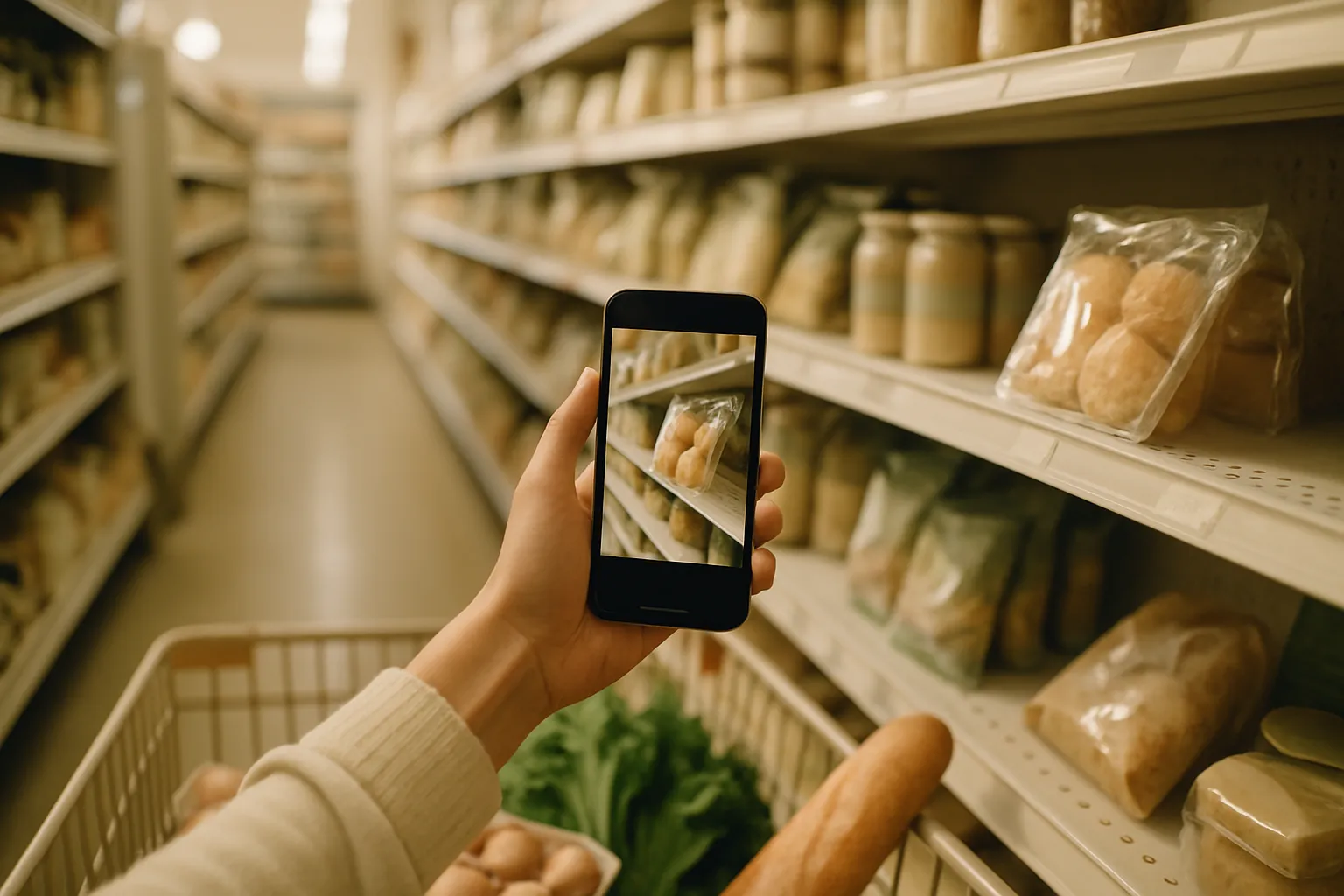
Judge food UGC by whether it moves units at shelf — velocity, new-door activation, and promo lift — not by likes, saves, or ROAS on a dashboard that a buyer never sees.
Retail-velocity UGC is food content built for one job: getting the next unit off the shelf and into the cart, at the retailers that decide whether your brand keeps its space. Most creator content is sold the other way around — as “authentic” video that builds trust and earns engagement, then graded on likes, saves, and a ROAS figure a category buyer never sees. That work has its place. But it quietly optimizes for the wrong outcome. The scoreboard that keeps you on shelf at Kroger, Whole Foods, Costco, Target, Amazon, Instacart, or TikTok Shop is velocity — units per store per week, new-door activation, marketplace rank, and lift around a promotion. This piece is about briefing and reading UGC against that scoreboard instead of the vanity one.
Engagement is not velocity
A video can do everything a “good” UGC video is supposed to do and still not sell a single incremental unit. It can rack up saves from people who already buy you, comments from other creators, and watch time from an audience three states away from any store that stocks you. Engagement measures attention. Velocity measures whether attention became a purchase in a place where you are actually distributed.
The gap matters because attention and purchase live in different systems. Your social dashboard rewards content that keeps people scrolling. Your buyer’s dashboard rewards content that clears inventory and justifies the facing. When those two scoreboards disagree — and they often do — most brands trust the one that updates in real time and feels good, not the one that decides their shelf. Retail-velocity UGC starts by refusing that trade: the point of the video is the unit, and everything upstream of the unit is a means, not the measure.
What actually moves product at shelf
Start from the shopper’s real problem, not yours. A grocery shopper is moving fast, half-distracted, and deciding between your product and the three next to it. UGC that moves units doesn’t explain your brand story — it resolves that decision in a couple of seconds. It shows the product doing the thing the shopper is hungry for, framed so the choice feels obvious.
The single most underrated lever is the first frame. If the opening moment doesn’t read as your product — the actual pack, the actual food, the actual use — you’ve spent your most valuable second on a warm-up. This is where organic and paid diverge hard, and it’s worth reading organic-vs-paid-first-three-seconds on how those opening seconds do different jobs. For velocity, the first frame should make the product recognizable and the appetite instant.
Then there’s the swap — the small, believable substitution that reframes a purchase. Instead of “try this new snack,” it’s “this is what I reach for instead of the thing you already buy.” The swap gives the shopper permission to move budget from an incumbent to you without feeling like they’re taking a risk. It maps a new product onto an existing habit, which is exactly the mental move a shelf decision requires.
And appetite appeal is not decoration — it’s a performance lever. Food that looks like it tastes good compresses the distance between watching and wanting. The steam, the pour, the pull-apart, the first bite — these are not styling flourishes, they are the reasons a scroll becomes a craving and a craving becomes a cart addition. Treat food-first craft as conversion infrastructure, because at shelf, it is.
Brief to the retail calendar
Velocity content that ignores the retail calendar is leaving its best weeks on the table. Retail runs on a schedule of moments where distribution, pricing, and attention line up — and UGC briefed to those moments does disproportionately more work than the same content posted into a random Tuesday. Frame the calendar as identity, not just timing: what does the shopper believe about your product during this window, and what content makes that belief true?
- Resets and category reviews: content that supports the story your buyer is telling to defend or expand your facing, timed so it’s live when the new set hits shelves.
- Costco roadshows: short, high-appetite demos that mirror the in-club sampling moment, built to carry the roadshow energy to shoppers who didn’t stop at the table.
- Prime Day and Amazon deal events: creative framed around the deal as a reason to act now, pointed at the exact ASINs that are discounted and rank-sensitive.
- New-door activation: content geo-relevant to markets where you just landed, so the first weeks of a new door don’t depend on shelf presence alone to prove the door was worth it.
- TikTok Shop and marketplace promotions: the promotion framed as identity — “this is the moment to try it” — with a clear, native path from watch to buy inside the platform.
- Seasonal and holiday windows: appetite content tuned to how people actually cook and snack during the window, so your product shows up in the use case the season creates.
Creators as retail performance partners
The upgrade in mindset is to stop treating creators as a top-of-funnel awareness buy and start treating them as retail performance partners. That means the creator brief and the buyer deck should be built from the same set of milestones. If your team is walking into a Kroger review talking about velocity in a set of test stores, the creator content running in those markets should be pointed at exactly that outcome — same window, same message, same product hero.
Practically, this means writing briefs that reference the retail milestone out loud: which retailer, which window, which shopper problem, which product hero, and what a win looks like at shelf. It means picking creators for their relevance to the markets and the use case, not only their follower count. And it means the content library you build becomes an asset your sales team can actually point to — proof of demand that supports the buyer conversation rather than a highlight reel that only impresses other marketers.
A creative testing menu for velocity
You don’t discover what moves units by intuition — you find it by running a disciplined menu of creative variables and watching which ones show up downstream. First frame, the swap, the hook line, the use case, the creator archetype: each is a dial worth turning deliberately, one at a time, so you learn what actually shifts behavior for your product and your category.
We keep a structured version of this so tests are comparable instead of one-off — the approach is laid out in cpg-creative-testing-menu. The goal isn’t a bigger pile of content. It’s a short list of moves you’ve verified move units, so the next brief starts from evidence instead of taste.
How to measure it honestly
Measuring retail impact honestly starts with admitting what UGC can and can’t claim. Creator content is one input among many — pricing, distribution, display, competition, weather. So the honest move is not to invent a clean attribution number. It’s to watch the right signals and read them in context, alongside the promotion and the calendar you already know about.
- Velocity: units per store per week in the stores and windows where content ran, compared against your own baseline and non-exposed markets where you can isolate them.
- New-door activation: how the first weeks of a newly stocked door perform in markets that got creator support versus those that didn’t.
- Promo lift: the shape of the bump around a deal event or reset, and whether supported windows lift differently than unsupported ones.
- Marketplace rank and reviews: movement in category rank, buy-box behavior, and review velocity on the exact ASINs the content pointed at.
- Sell-through and reorder signals: whether retailers are reordering at a pace that keeps you in distribution, which is the outcome the whole exercise exists to protect.
Notice what’s not on that list: a made-up percentage lift or a tidy “content drove X units” claim. Those numbers are comforting and usually indefensible. The credible version is to look at directional movement in the right metrics, in the right windows, and to be honest about what else was in play. That posture is what earns you a seat in the buyer conversation, because it’s the same posture a good category manager takes.
Retail-velocity UGC is not a different kind of video so much as a different definition of the job. Build content that reads as your product in the first frame, gives the shopper a believable swap, looks like it tastes good, lands in the retail window that matters, and points at the shelf or the ASIN where the unit actually lives. Then measure it against velocity, doors, and lift — not impressions. If that’s the work you need, tell us what you need and we’ll brief to your retail calendar, not a content calendar.
Frequently asked questions
What is retail-velocity UGC?
It’s food UGC briefed and produced to move units at retail — Kroger, Whole Foods, Costco, Target, Amazon, Instacart, TikTok Shop — rather than to maximize engagement. The success measure is velocity, new-door activation, marketplace rank, and promo lift, not likes or saves.
How is it different from influencer marketing?
Influencer marketing usually optimizes for reach and brand affinity, graded on impressions and engagement. Retail-velocity UGC treats creators as performance partners whose briefs are tied to buyer decks and retailer milestones, so the content is pointed at moving product in specific markets and windows.
How do you measure UGC’s retail impact?
Honestly, and in context. You watch velocity in exposed stores against a baseline, new-door performance in supported versus unsupported markets, the shape of promo lift around deal events, and marketplace rank and review movement on the exact ASINs. You don’t invent a clean attribution number — creator content is one input among pricing, distribution, and display.
What creative moves units at shelf?
A first frame that instantly reads as your actual product, a believable swap that lets a shopper move budget from an incumbent without feeling risk, and genuine appetite appeal that turns a scroll into a craving. Timing the content to a retail moment — a reset, roadshow, or deal event — amplifies all of it.
Does retail-velocity UGC replace brand or awareness content?
No. Awareness and trust-building content still matter. Retail-velocity UGC is the layer briefed to a specific retail outcome, so a portion of your creative budget is measured against the scoreboard that decides whether you keep your shelf space, not only the one that feels good on a social dashboard.
Written by the Pantry Social Studio team — a food-first UGC and creator studio working with grocery, snack, beverage, pantry, kitchen, and CPG brands. We brief and produce creator content for organic and paid social.
Related Pantry Notes

Food UGC Strategy
A simple creative testing menu for CPG brands
A practical menu of hooks, formats, creator archetypes, and product moments brands can test across paid and organic channels.
7 min readFor brands
Food UGC Strategy
Organic vs paid food creative: what changes in the first three seconds
The difference between a post people enjoy and an ad creative that can earn attention quickly.
6 min readFor brands
Food UGC Strategy
The Ultimate Guide to Food UGC Strategy for CPG & Grocery Brands
A complete, food-first guide to food UGC strategy — how to brief, find, and test creators who make pantry, snack, and beverage products sell in real kitchens.
13 min readFor creators & brands
Brands: source food-first UGC
Tell us what you need and we'll help identify creator fits by category, format, style, platform, and usage.