Food UGC Strategy
The Ultimate Guide to Food UGC Strategy for CPG & Grocery Brands
Pantry Social Studio · June 24, 2026 · 13 min read
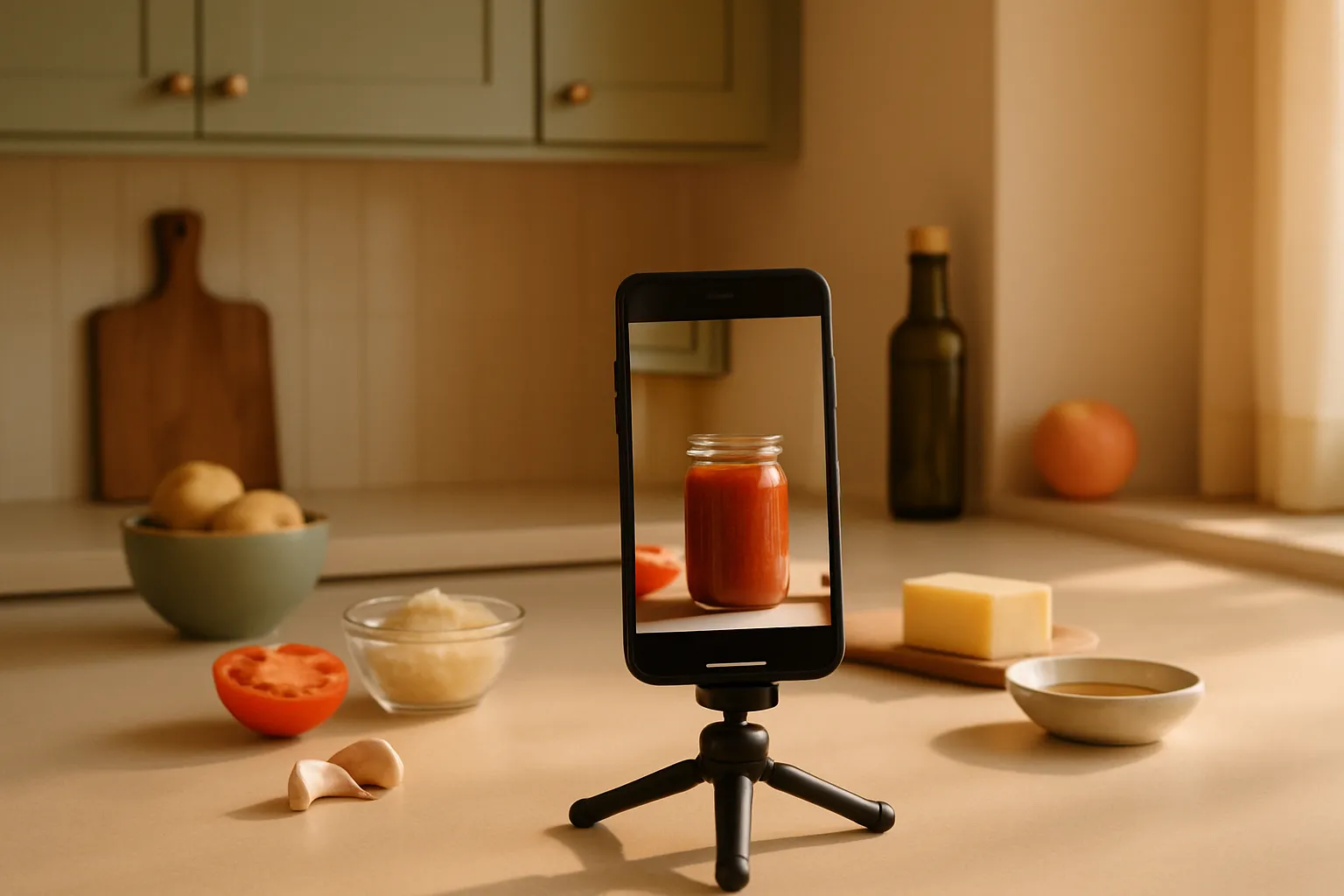
A food UGC strategy works when it captures taste, texture, and use case in real kitchen context — pairing the right creators with paid-ready briefs and a disciplined testing menu, not polish for its own sake.
A food UGC strategy is the deliberate system a brand uses to commission creator-made video and photo content that shows real people buying, opening, cooking, and tasting food products in their own kitchens. Food is its own category because the buying decision is sensory: shoppers want to know how something tastes, how it pours, how it melts, and where it fits in a real meal. Generic UGC playbooks built for skincare or apparel miss this completely. The strongest food-first UGC translates taste, texture, and use case into something a viewer can almost feel through the screen — and it does so in real kitchen context, with steam, crumbs, and a hand reaching for the jar. Throughout this guide we will cover the formats, briefs, sourcing, rights, and testing that turn that idea into a repeatable engine, whether you sell hot sauce, sparkling water, frozen dumplings, or a shelf-stable pantry staple.
What food UGC strategy actually means (and why food is its own category)
At its core, a food UGC strategy answers three questions: who makes the content, what they show, and where it runs. Unlike polished brand films, user-generated content is made by everyday creators who feel like a friend recommending a snack rather than a billboard selling one. Food deserves its own approach because the conversion moment is appetite — a viewer has to want a bite. That means the content has to nail the sensory cues that beauty or fashion content never needs: the crackle of a chip, the slow pour of a cold brew, the pull of melted cheese, the first reaction after a taste. A food UGC strategy also has to respect the grocery context, where products live on crowded shelves and in busy weeknight kitchens. When you brief for that reality instead of for a studio set, the content earns trust and the brand stops looking like an interruption.
- Sensory-first: taste, texture, smell cues, and the reaction shot do the persuading.
- Context-rich: real fridges, real pantries, real plates — not seamless white backdrops.
- Use-case driven: shows when and how the product fits into an actual meal or moment.
- Trust-led: the creator feels like a peer, which matters more for things you put in your body.
UGC creators vs influencers for food brands — when to use which
These two roles get blurred constantly, and the distinction matters for budget and intent. An influencer is paid largely for their audience — you are renting their reach and credibility to their followers. A UGC creator is paid for the content itself, which you own and run as ads or organic posts from your own channels. For most grocery and CPG brands, the difference between a UGC creator and an influencer comes down to whether you need distribution or assets. If you want a steady stream of paid-ready food creative to test across paid social, a creator roster is the better engine. If you want a trusted food personality to vouch for a launch to their following, an influencer makes sense. Many food brands run both, but they should never confuse the two line items — one buys reach, the other buys a content library you can iterate on for months.
Where to find and vet food-first creators
The best food creators are not always the ones with the largest followings — they are the ones who can make a bowl of cereal look irresistible and a pantry restock feel satisfying. When you are figuring out how to find UGC creators, prioritize a food-specific portfolio over raw follower count. Look for creators who already shoot in real kitchens, who frame product-in-context naturally, and whose taste-test reactions feel genuine rather than performed. A strong creator portfolio should show variety: a haul, a recipe integration, a close-up pour, a quick demo. Vet for reliability and food-handling sense as much as for aesthetics — a creator who keeps a clean counter and understands lighting on glossy or wet surfaces will save you reshoots.
- Portfolio first: do they already shoot food in real kitchen context, not just hold products?
- Sensory skill: can they capture pour, melt, crunch, and steam convincingly?
- Reaction authenticity: do their taste tests read as honest, not scripted?
- Reliability: clear communication, on-time delivery, and clean shooting environments.
- Range: comfortable across short-form formats from haul to recipe to demo.
How to brief creators so the content converts
The brief is where most food UGC quietly succeeds or fails. A great brand brief gives the creator a clear hook, the one or two sensory moments that must appear, and the use case to show — then gets out of the way so their voice stays real. Spell out the must-have shots: the pour, the first bite, the label-forward beauty moment, the restock into the pantry. For category-specific guidance, our snack and pantry-staple brief approach and the snack-brand UGC brief checklist walk through exactly what to specify and what to leave open. The goal is creative direction, not a script the creator reads word for word — over-direction is the fastest way to make food UGC feel like an ad and lose the trust that made it worth commissioning.
- Lead with one clear hook tied to taste, texture, or a relatable moment.
- Name the non-negotiable shots: the pour, the bite, the melt, the restock.
- Define the use case — weeknight dinner, post-workout, lunchbox, late-night snack.
- Give brand context and a few do-not-say notes, then leave the wording to the creator.
- Specify aspect ratio, length, and where it will run so framing fits the placement.
The food UGC format toolkit
Food UGC is not one thing — it is a menu of short-form formats, each suited to a different product and goal. The taste test sells reaction and flavor; the haul sells discovery and basket-building; the restock sells routine and repeat purchase; the recipe integration sells versatility; the demo sells ease of use; the comparison sells your edge over a familiar alternative; the beverage pour sells refreshment and craveability; the appliance demo sells the gadget-and-ingredient pairing; and the paid-social hook compresses all of it into the first three seconds. Not every product fits every format — a format chooser keyed to food categories helps you match a sparkling beverage to a pour, a sauce to a recipe integration, or a snack to a taste test. Browsing real food UGC examples is the fastest way to see each format working before you brief one.
- Taste test — reaction and flavor payoff; ideal for snacks, sauces, and new launches.
- Haul — discovery and basket-building; great for grocery and multi-SKU brands.
- Restock — routine and repeat purchase; perfect for pantry staples.
- Recipe integration — versatility and use case; strong for sauces, oils, and bases.
- Demo — ease and speed; good for meal kits and prep-forward products.
- Comparison — your edge versus a known alternative; useful for better-for-you swaps.
- Beverage pour — refreshment and craveability; built for drinks and cold brews.
- Appliance demo — the gadget-plus-ingredient pairing; great for kitchen and CPG crossovers.
- Paid-social hook — the first-three-seconds version engineered to stop the scroll.
Why product-in-context beats polish for pantry and CPG products
There is a strong temptation to make food look like a magazine spread, but for grocery and CPG the glossier the content, the more it reads as an ad — and the less it sells. Shoppers trust a slightly imperfect counter, a normal fridge, and a hand they could imagine being their own. That is the whole case for product-in-context UGC: the product appears where it will actually be used, surrounded by the clutter of a real life, which is exactly what makes it believable. This is especially true for pantry products in short-form, where the win is showing the jar going back on the shelf, the box opening at breakfast, the bottle living on the counter. Polish has its place in hero brand films, but the creator content that drives consideration leans into real kitchen context, not away from it.
Turning one product into many creator angles
A single SKU can power dozens of pieces of content if you treat it as a set of stories rather than one message. The same jar of sauce can be a quick weeknight pasta, a marinade, a dip, a comparison against a name brand, a restock moment, and a taste-test reaction — each a distinct angle for a distinct audience. Our framework for taking one product into ten angles shows how to map use cases, viewers, and hooks against a single product so you never run dry. This is also how you keep a creator roster productive: instead of commissioning one video per creator, you brief several angles and build a deep, varied content library from a single shipment of product.
Organic vs paid: what changes in the first three seconds
Organic and paid social ask different things of the same footage, and the difference shows up almost entirely in the opening. Organic content can breathe — it can open on a slow pour or a calm kitchen and trust the algorithm and the caption to do some work. Paid content has to earn the watch in the first three seconds or it is gone, which means a sharper hook, an immediate sensory payoff, or a pattern interrupt right at the top. Understanding what changes in the first three seconds between organic and paid lets you brief two openings from one shoot — a softer organic top and a punchier paid-ready hook — so the same creator session feeds both channels without reshooting.
Building a creative testing menu you can actually run
Volume without structure is just expensive guessing. A creative testing menu turns your food UGC into experiments you can read: you isolate one variable at a time — hook, format, creator type, or use case — and let performance tell you what to scale. Our CPG creative testing menu lays out a practical way to organize hooks, angles, and formats into a grid you can run week over week. The discipline matters more than the volume: three deliberate variations of a hook teach you more than thirty random videos. Build the menu so every test answers a question, log what wins, and feed those learnings back into the next round of briefs.
Usage rights, whitelisting, and what creators charge
Rights are the part brands most often get wrong, and the most expensive to fix after the fact. Before anyone hits record, agree on where the content can run, for how long, and whether you can run it as a paid ad from your own account or boost it from the creator’s handle through whitelisting. Settling usage rights before production avoids the awkward, costly scramble of trying to license a video after it has already performed. On price, UGC creator rates vary with deliverable count, exclusivity, and the length and breadth of usage — a single organic clip costs far less than a bundle with a year of paid rights and whitelisting. Build rights into the brief and the budget from day one rather than treating them as an afterthought.
- Define usage: organic only, paid ads, or both — and on which platforms.
- Set a term: 3, 6, or 12 months of paid rights, with renewal terms agreed up front.
- Decide on whitelisting: will you boost from the creator’s handle for added authenticity?
- Price the bundle: deliverables, exclusivity, and usage length drive the rate together.
Planning seasonal food content before everyone else
Food is profoundly seasonal, and the brands that win the calendar brief early. Holiday baking, summer grilling, back-to-school lunchboxes, cozy soup season, and the New Year health reset all arrive on schedule — yet most brands commission content for them weeks too late to test and scale. Mapping the seasonal moments worth briefing early means you ship product to creators well ahead of the moment, leaving room to test hooks before demand peaks. A good rule of thumb is to brief a season at least six to eight weeks out, so finished, tested creative is ready to run the moment shoppers start searching and stocking up.
For creators: how to break into food UGC
Food UGC is one of the most welcoming on-ramps for new creators because the bar is craveable, honest content rather than a huge following. If you are learning how to become a UGC creator, start by shooting the snacks and pantry staples already in your kitchen — practice the pour, the bite, the restock, and the genuine reaction until they look effortless. Build a tight portfolio across a few formats, then look for UGC creator jobs with food and grocery brands specifically, since category fit makes your reel far more persuasive. When your work is ready, you can apply to the roster and start receiving briefs from food-first brands.
- Practice on what you have: real snacks, drinks, and pantry items in your own kitchen.
- Master the sensory shots: pour, bite, melt, steam, and the honest first reaction.
- Show range: build a portfolio with a haul, a taste test, a recipe, and a demo.
- Specialize in food: category fit beats a generic reel when pitching grocery brands.
Putting it together — a 90-day food UGC plan
Strategy becomes real when it lives on a calendar. Here is a concrete 90-day arc to stand up a food UGC engine from scratch, designed so each phase compounds into the next. If you would rather have a partner run this for you, tell us what you need and we will build the roster, briefs, and testing menu around your products.
- Weeks 1-2 — Foundation: define your hero SKUs, pick your priority formats, and lock usage rights and budget before any sourcing.
- Weeks 3-4 — Sourcing: build a shortlist of food-first creators, review portfolios, and confirm rates and rights for an initial roster.
- Weeks 5-6 — Briefing: ship product and send tightly scoped briefs covering hooks, must-have sensory shots, and use cases across a few formats.
- Weeks 7-8 — First creative wave: collect deliverables, organize them into your testing menu, and prepare paid-ready and organic cuts.
- Weeks 9-10 — Test: launch a structured round of organic and paid social tests, isolating one variable at a time and logging what wins.
- Weeks 11-12 — Scale and plan: double down on winning hooks and formats, rebrief your strongest creators, and brief the next season early.
Frequently asked questions
What is a food UGC strategy?
It is the system a brand uses to commission creator-made video and photo that shows real people buying, cooking, and tasting its products in real kitchens — then runs that content across organic and paid social. For food, it centers on taste, texture, and use case rather than polish.
How is food UGC different from regular UGC?
Food UGC has to trigger appetite. That means capturing sensory cues — the pour, the crunch, the melt, the honest reaction — and showing the product in real kitchen context. Playbooks built for skincare or apparel miss these category-specific moments entirely.
Should grocery brands use UGC creators or influencers?
Use UGC creators when you want a library of paid-ready assets you own and can test across paid social. Use influencers when you want to borrow a food personality’s reach for a launch. Many brands run both, but they buy different things — content versus distribution.
How many creators or videos do I need to start?
Start small and structured rather than large and random. A handful of food-first creators briefed across two or three formats gives you enough variety to run a real testing round. Volume without a testing menu is just expensive guessing.
How far ahead should I plan seasonal food content?
Brief a season roughly six to eight weeks out. Food moments like holiday baking, summer grilling, and back-to-school arrive on schedule, and briefing early leaves time to ship product, collect content, and test hooks before demand peaks.
What should I lock down before production starts?
Usage rights, term length, and whitelisting. Agree on where content can run, for how long, and whether you can boost it as a paid ad before anyone records. Settling rights up front avoids an expensive scramble to license a video after it performs.
Why does product-in-context beat polished studio shots for food?
For grocery and CPG, glossier content reads as an ad and sells less. A slightly imperfect counter, a normal fridge, and a relatable hand make the product believable and show shoppers exactly where it fits in their real life.
How can a new creator break into food UGC?
Start with the snacks and pantry staples already in your kitchen, master the sensory shots, and build a tight portfolio across a few formats. Then pursue food-specific creator jobs and apply to a food-first roster — category fit matters more than follower count.
Written by the Pantry Social Studio team — a food-first UGC and creator studio working with grocery, snack, beverage, pantry, kitchen, and CPG brands. We brief and produce creator content for organic and paid social.
Related Pantry Notes
Food UGC Strategy
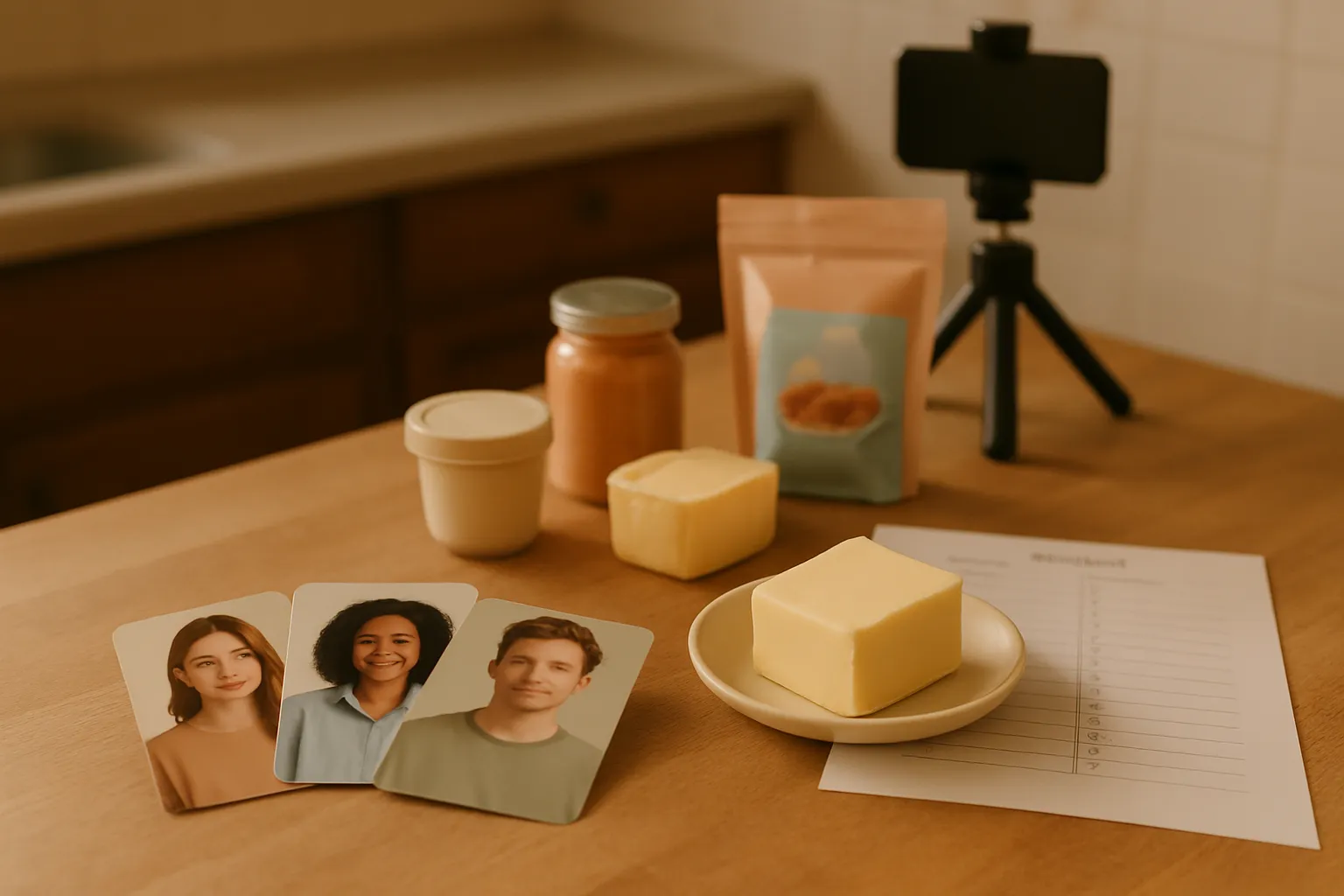
How to Find UGC Creators for Food, Grocery, and CPG Brands
A practical guide to where food, grocery, and CPG brands can find UGC creators, plus what to evaluate before you brief one.
7 min readFor brands
Creative Formats
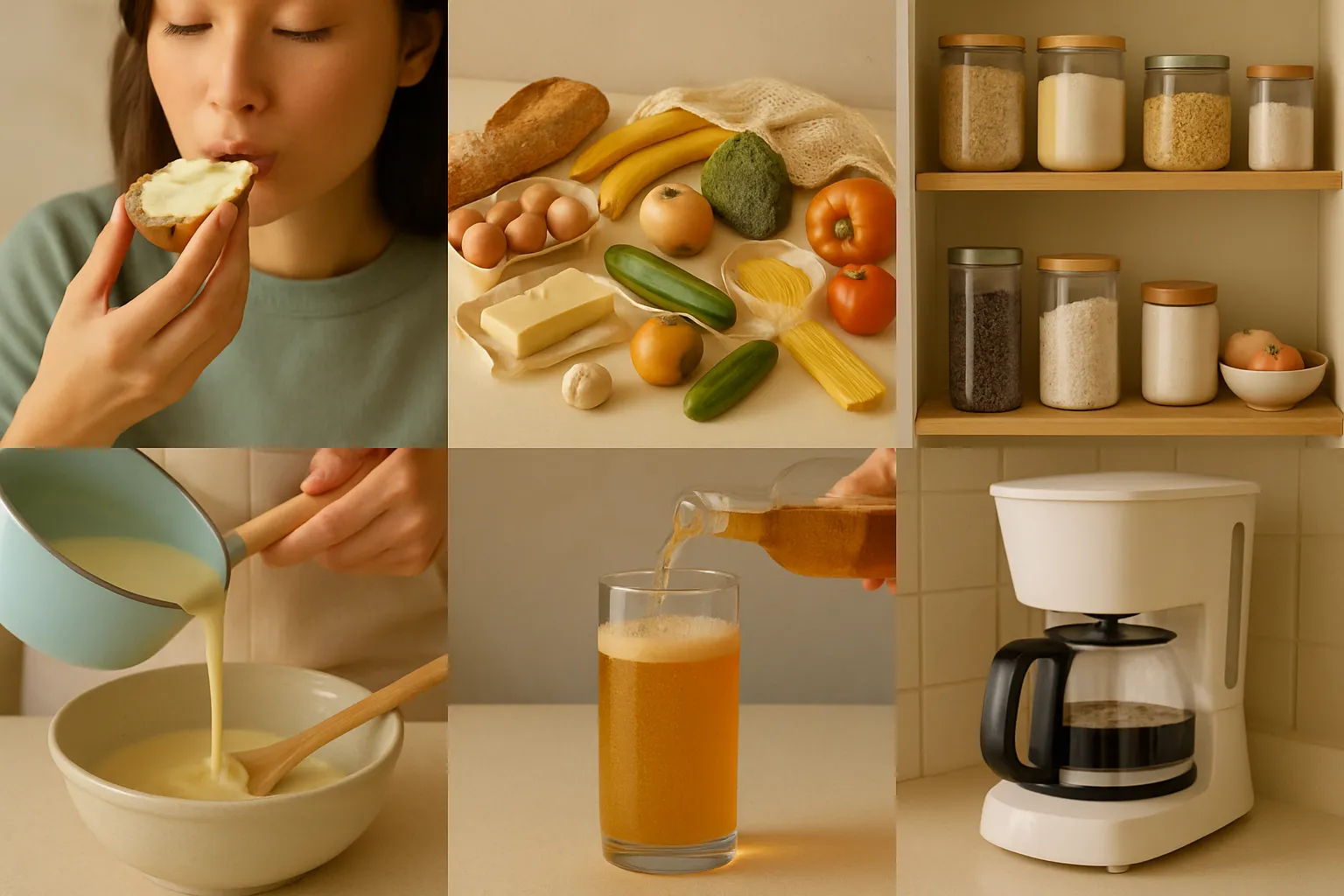
Food UGC Examples: Formats Grocery and CPG Brands Can Actually Use
A practical tour of food UGC examples — taste tests, recipe integrations, grocery hauls, pantry restocks, demos, and paid hooks — and what each one actually sells.
7 min readFor brands
Food UGC Strategy
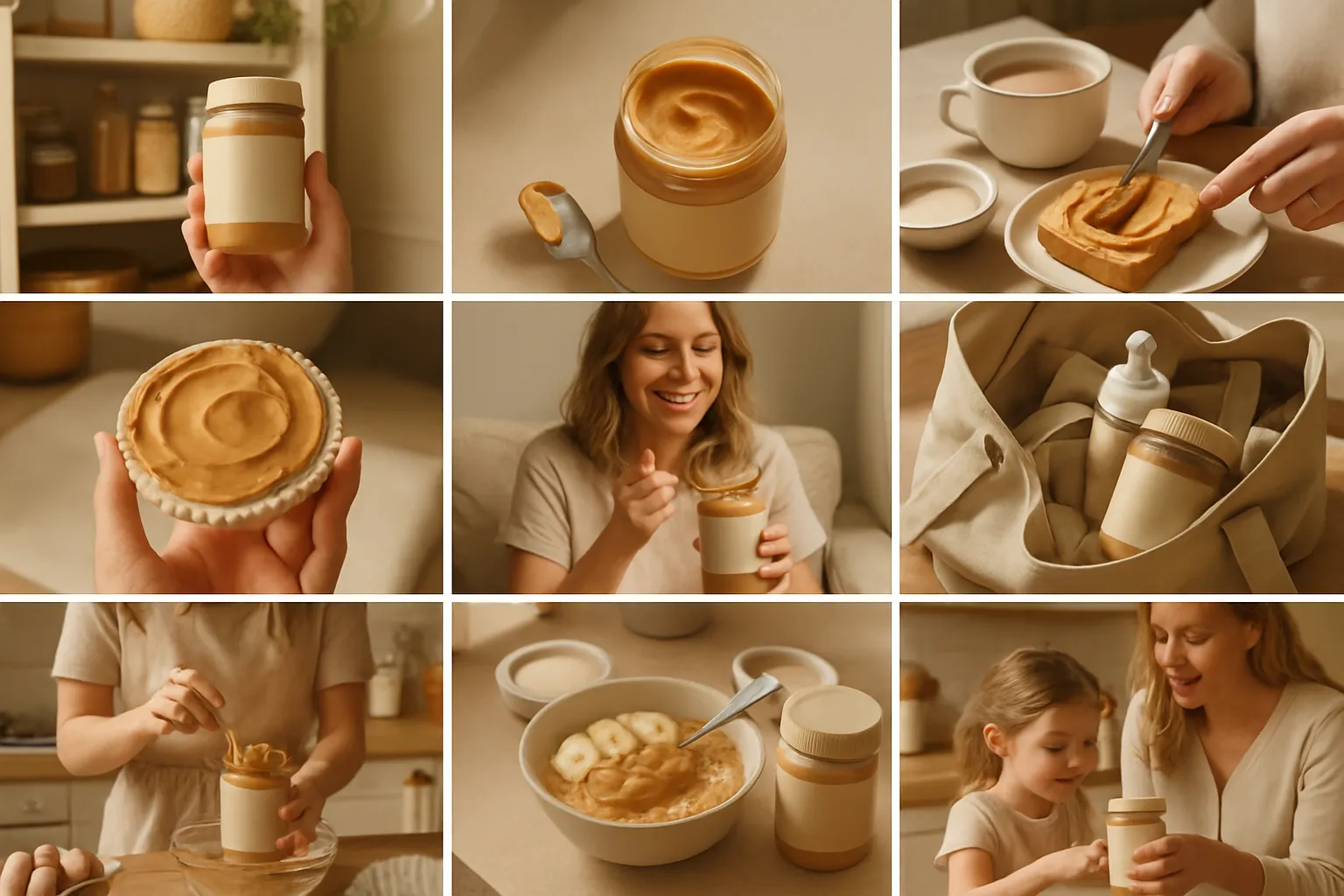
How to turn one grocery product into ten creator angles
A framework for turning a single product into hooks, use cases, household moments, and platform-ready content variations.
6 min readFor brands
Need food-first UGC for your next launch?
Tell us what you're building, or apply to create food-first content — we'll help identify creator fits by category, format, platform, and usage.