Food UGC Strategy
Sensory proof: the missing layer in food UGC and CPG ads
Pantry Social Studio · June 30, 2026 · 9 min read
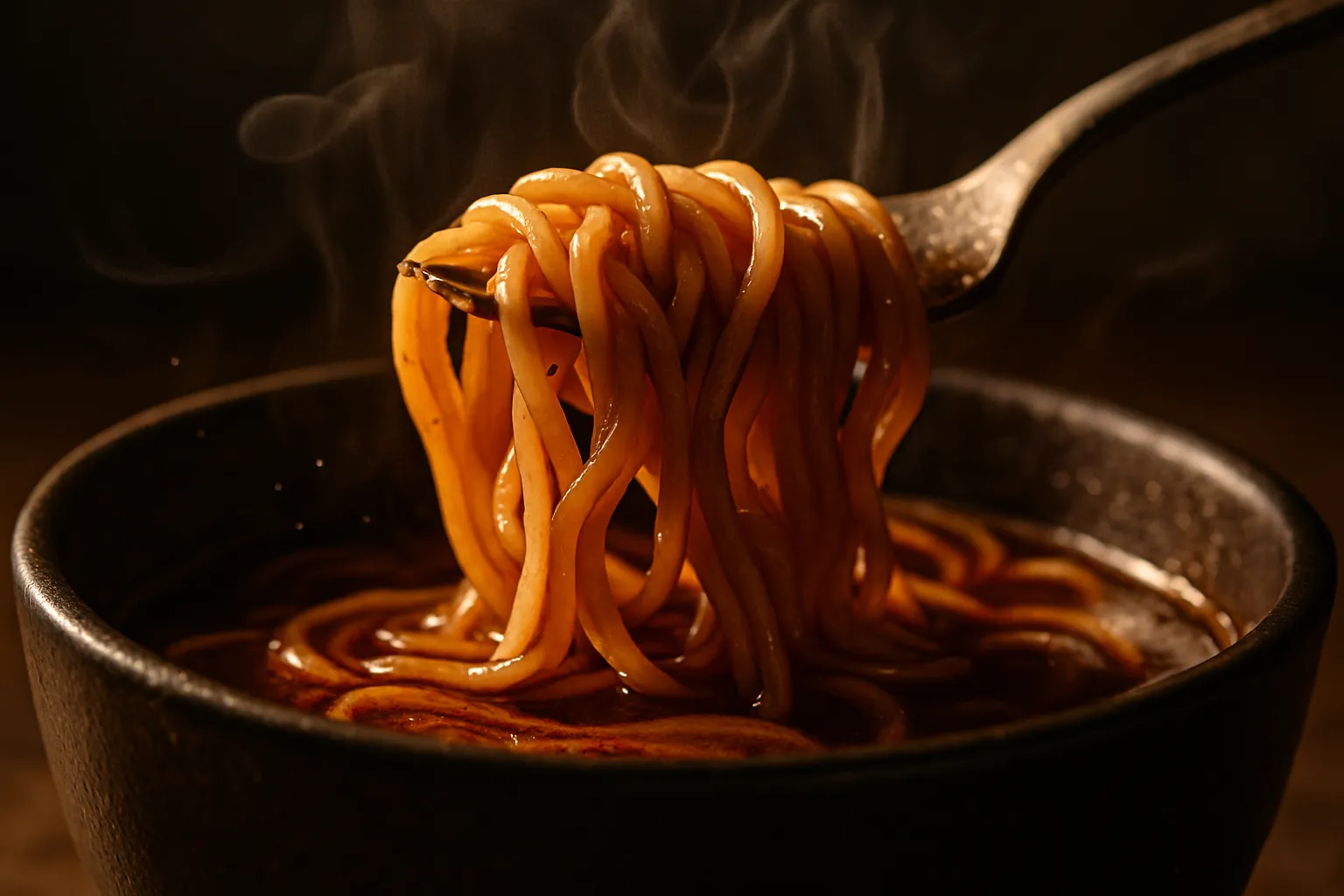
Sensory proof, the on-screen evidence of taste, texture, temperature, and craving, is the mechanism that makes food feel real enough to buy, and creator-led video delivers it more credibly than studio gloss.
Scroll your own category on a phone for five minutes. Most food and beverage ads look expensive and taste like nothing. The lighting is flawless. The product sits center frame, glistening under a softbox, styled to within an inch of its life. And you feel absolutely no urge to eat it. That gap, between a spot that looks good and a spot that makes your mouth water, is the difference between an ad that wins an award and an ad that moves units. The thing that closes that gap has a name, even if most brands never brief for it. Call it sensory proof: the on-screen evidence of taste, texture, temperature, and craving that makes food feel real. Studio gloss chases beauty. Sensory proof chases belief. This is the layer that goes missing, and it is the one that sells.
What sensory proof actually is
Sensory proof is not a mood or a filter. It is concrete visual and audible evidence that a food tastes and feels the way you are claiming it does. It is the steam that says hot. The crunch you can hear. The cheese pull that proves melt. The condensation on a cold can. The face someone makes on the first bite, before they have time to perform. You are not describing the experience with adjectives. You are showing the receipts. That distinction matters because appetite is a physical response, not an argument. Nobody gets hungry from the phrase 'irresistibly crispy.' They get hungry from watching a crust shatter under a thumb in a tight macro shot with the real snap left in the audio. Sensory proof is mechanism, not decoration. It gives the viewer's brain something to simulate, and simulation is what precedes wanting.
Appetite appeal is the proof mechanism, not the garnish
Marketers tend to treat appetite appeal as the pretty part, the thing you add after the message is nailed down. Flip that. In food, the sensory beat is the message. It does three jobs no headline can do. It earns the first three seconds, because a sizzle or a pour or a cheese stretch stops a thumb faster than any claim. It holds watch time, because texture invites the eye to stay and study. And it builds belief, because seeing the food behave the way real food behaves quietly answers the only question that matters before purchase: is this actually going to be good. We are being careful here. Sensory proof does not guarantee a sale on its own. Price, availability, and the product itself all vote. But it is the layer that earns the attention every other lever depends on. Skip it, and you are optimizing a message nobody stayed to hear. For how the opening seconds decide everything, see the first three seconds of organic vs paid.
The sensory beat taxonomy
Sensory proof is not vague. It breaks into specific, briefable beats. These are the moves that make food read as craveable on a screen. Treat this as a shot list, not a vibe. You do not need all of them in one video. You need the two or three that are true to your product and hit them hard.
- Steam: the rising curl off a hot dish or a fresh pour. Reads as temperature and freshness instantly. Backlight it so it shows.
- Sizzle: audio and visual together, the pan, the grill, the moment heat hits food. Pure diegetic energy.
- The pour: liquid in motion, coffee into a cup, sauce over a bowl, dressing down a salad. Motion the eye cannot ignore.
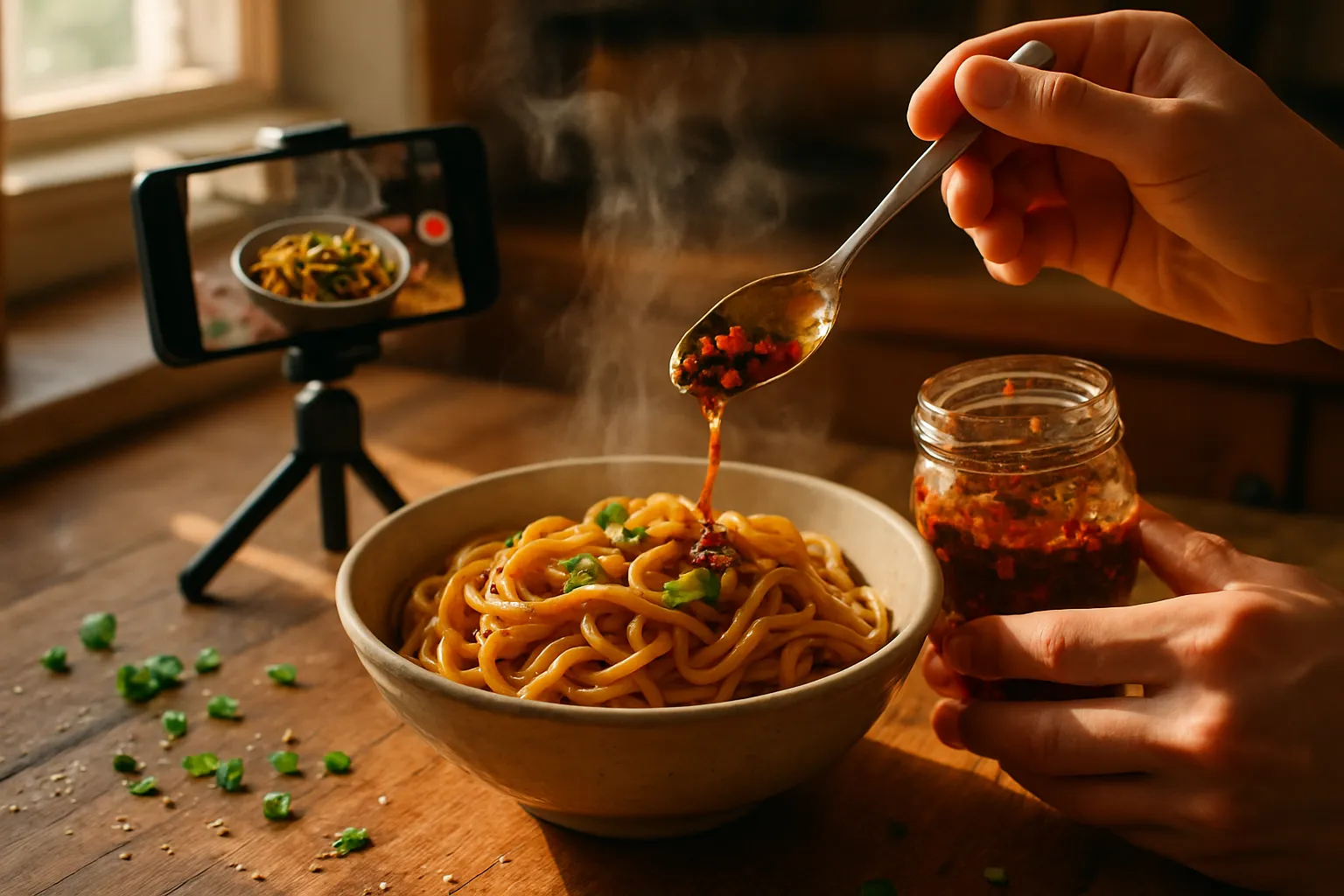
- The drizzle: a slower, glossier pour. Honey, olive oil, caramel, hot sauce. It signals richness and quality.
- The seal pop: the crack of a fresh jar, the hiss of a can, the peel of a lid. Proof of freshness and a satisfying release.
- The crunch or the pull: the shatter of a chip or crust, the tear of soft bread. Texture you can hear before you taste.
- The cheese stretch: the classic melt reveal. Reads as indulgence and doneness in one motion.
- The fizz and first sip: bubbles rising, condensation, the pause after the first drink. The whole beverage promise in three seconds.
- The plate build: hands assembling, layering, garnishing. It shows usage and makes the food feel made, not staged.
- The first-bite reaction: the unperformed face and pause after tasting. The most honest proof there is.
- Real diegetic audio: keep the actual sound. The crunch, the pour, the sizzle, unmuted. Stock music over silence kills the sensory beat.
- Macro close-ups: get uncomfortably close. Pores in bread, sugar crystals, oil sheen, the texture only a tight lens reveals.
The sensory proof scorecard
Here is a fast audit you can run on any food ad you are currently paying to distribute. Pull up three of your live assets, watch each on mute first, then with sound. Score one point per yes. This is not academic. It tells you exactly where your creative is leaving appetite on the table.
- First three seconds: does a sensory beat, not a logo or a talking head, open the video?
- Temperature cue: can I tell if this food is hot or cold without being told?
- Texture evidence: is there at least one crunch, pull, pour, or macro that shows how it feels?
- Real audio: is the actual food sound present, or is it buried under music?
- Human response: does a real person react to eating or drinking it on camera?
- Usage context: do I see the product being used or eaten, not just displayed?
- Craving on mute: watched silent, does it still make me want the food?
- Believability: does this look like food a real person made, or a styled prop?
Reading your score
Six or more yeses across the board and your creative is doing the sensory work. Three or fewer and you have a gloss problem: your ads are pretty and inert, and no amount of media spend fixes an asset that gives the brain nothing to crave. The most common failure pattern we see is a five-point drop between the mute pass and the sound pass, which means the whole appetite story was living in a voiceover and a music bed. Strip those away and there is no proof left. If your scores are sliding over time on the same creative, that is not a sensory problem, that is fatigue, and it needs a different fix. We break that down in creative fatigue in food ads.
Why creator-led video delivers sensory proof more credibly
You can shoot a beautiful cheese pull in a studio. What you cannot easily manufacture is belief. Polished spots carry a tax: the viewer knows it is an ad, so the perfect shot reads as staged, and staged food is food that might not taste like it looks. Creator-led video flips the trust equation. When a real person films the seal pop in their own kitchen and reacts before they can compose their face, the proof lands as observation rather than persuasion. The slightly uneven counter, the natural light, the unpolished audio, these are not flaws. They are credibility signals. The hand looks like your hand. The kitchen looks like your kitchen. That is why food-specific UGC often out-converts the expensive spot: it delivers the same sensory beats inside a frame the viewer already trusts. For the wider case, see why UGC works for food brands.
How to brief sensory proof so you actually get it
Most briefs describe the product and the message and leave the sensory beats to chance. That is how you end up with a creator holding your product and talking, which is a testimonial, not appetite. Brief the beats explicitly. Name the two or three sensory moments the video must capture and treat them as required shots. Tell the creator to keep the real audio and film the crunch or pour in close. Ask for the honest first-bite reaction, filmed in one take, not a scripted line about how good it is. Specify at least one macro. Give permission for imperfection, because a slightly messy pour is more convincing than a flawless one. The goal is a UGC video library where every asset carries proof, not just a face. Do that and the same shoot yields paid-social-ready assets and organic cuts from one session.
Sensory proof across the funnel
Sensory proof is not one setting you leave on. The beat you lead with should change with what the viewer already knows and what job the clip has to do. A cold audience owes you nothing, so the hook has to be pure appetite: open on the loudest sensory beat you have, the shatter, the cheese pull, the fizz over ice, in the first second, with no logo and no setup. The job there is to interrupt, not to explain. A mid-funnel education clip is talking to someone who is curious but unconvinced, so the beats slow down and start teaching. This is where the drizzle shows portion, the plate build shows usage, the cook-on-camera shows the real result. You are still leading with the senses, but each beat now answers a question. A retargeting or closing clip is talking to someone who has seen you and hesitated, so the beats do reassurance work: the honest first-bite reaction, the real texture in macro, the proof that the product delivers what the earlier ad promised. Same taxonomy, different emphasis. Map the beat to the stage and one shoot can feed all three.
Category-specific sensory proof
The beats that sell a chip do not sell a supplement. Appetite appeal is category-specific, and briefing the wrong beat wastes the shoot. Here is where the proof lives across the aisles we work in most.
- Snacks: crunch is king. Lead with the shatter, the break, the reach into the bag, real audio, and macro texture on the surface. Show the mess on fingers. Add the dip, the double-dip, the crumb detail, and the rustle of the bag as its own sound.
- Beverages: fizz, pour, condensation, and the first sip. Cold needs visible sweat on the can or glass. The pause after the sip sells refreshment more than any claim. Add the pour over ice with the crackle, the swirl that shows color and body, and the exhale after a hot pour like coffee.
- Pantry staples: these are about transformation and usage. Show the drizzle, the way the oil coats, the sauce building a dish. Prove versatility by showing the product mid-recipe, not on a shelf. Add the spoon dragging through to show viscosity, the toss that coats every piece, and the same jar used across two different dishes.
- Frozen: the whole job is defeating the frozen-equals-sad bias. Show the steam on the plate after heating, the pull, the fresh-looking result. Cook it on camera to prove the payoff. Add the crisp edge after the oven, the fork breaking through a hot center, and the honest before-and-after from box to plate.
- Dairy: this is about richness, freshness, and mouthfeel. Show the slow spoon pull through yogurt, the drag of a knife through soft cheese, the pour of cream folding into coffee. Add the sheen of butter melting on something hot and the clean snap of a fresh block being cut.
- Supplements and wellness: harder, because taste is often not the hook. Sensory proof shifts to mixability, texture, and ritual. Show the powder dissolving cleanly, the scoop, the daily habit. Prove it is not chalky and not a chore. Add the shake and clear settle, the smooth pour with no clumps, and the calm morning routine that makes the habit feel easy.
Common mistakes that kill sensory proof
Most sensory proof dies in post, not on set. The beats are captured and then edited into oblivion, or they were never really captured at all. Here are the failures we see most, and they are all avoidable.
- Over-editing: too many cuts and speed ramps chop up the beat before the eye can register it. A crunch needs a beat to land. Let the shot breathe.
- Music burying the diegetic audio: a stock track at full volume over the sizzle deletes the proof. The real sound is the asset. Duck the music or drop it entirely.
- Macro shots with no motion: a beautiful still-life macro is a photograph, not appetite. The eye craves movement. Add the pour, the pull, the drag, or the shot stays inert.
- Packaging-only hero shots: opening on the box or the can proves nothing about the food inside. Get past the packaging to the product behaving.
- Perfect-but-fake styling: props sprayed to shine and food too flawless to be real read as staged, and staged food feels like it will not taste like it looks.
- Talking over the beat: a voiceover explaining how crunchy it is, played over a muted crunch, is telling instead of showing. Let the food make its own case first.
How sensory proof maps to product education and conversion
Sensory proof is not only for the top of the funnel. The same beats that stop a thumb also teach the product. A drizzle shot shows how much sauce coats a serving, which answers a usage question. A cook-on-camera frozen clip teaches the prep and sets the expectation for the result. A mixability shot for a supplement pre-empts the number one objection. This is where appetite appeal quietly becomes product education, and product education is what closes the gap between interest and purchase. The viewer has now seen the food behave, seen it used, and seen a real person enjoy it. Those three proofs together build the belief that precedes the click. For putting the product inside real usage, see product in context UGC.
The takeaway before you spend another dollar
Run the scorecard on your live creative this week. If your ads are scoring low, the problem is almost never the media plan and almost always the asset. Beauty is not the same as appetite. A styled hero shot can be flawless and still give the viewer nothing to crave. Sensory proof is the layer that turns a good-looking ad into a hungry one, and it is briefable, scoreable, and repeatable. Build a creative system around the beats, not the gloss, and every asset starts earning the attention your spend is buying.
Work with Pantry Social Studio
Pantry Social Studio builds creator-led video systems for food, beverage, grocery, wellness, and CPG brands, engineered around sensory proof from the brief forward. We map the sensory beats your category needs, brief creators to capture them credibly, and hand back a UGC video library of paid-social-ready assets that make your product feel real enough to buy. If your current ads look expensive and convert like wallpaper, request a sensory proof review and we will score your live creative and show you exactly where the appetite went missing.
Frequently asked questions
What is sensory proof in food advertising?
Sensory proof is the on-screen evidence of taste, texture, temperature, and craving that makes food feel real. It is the steam, the crunch, the pour, the cheese pull, the first-bite reaction, and the real audio that show, rather than claim, that a food is good. It is the mechanism that earns attention and builds belief before purchase.
Why do polished studio food ads often fail to make people hungry?
Studio gloss optimizes for beauty, not belief. A perfectly styled shot reads as staged, and staged food feels like it might not taste the way it looks. Without concrete sensory beats and real audio, a flawless ad gives the brain nothing to simulate, so it looks expensive and provokes no craving.
How do I brief a creator to capture sensory proof?
Name the two or three sensory beats the video must include and treat them as required shots. Ask for real diegetic audio, at least one macro close-up, and an honest first-bite reaction filmed in one take. Give permission for imperfection, since a slightly messy pour is more convincing than a flawless one.
Does sensory proof work for supplements and wellness products?
Yes, but the beats shift. When taste is not the hook, sensory proof moves to mixability, texture, and ritual. Show the powder dissolving cleanly, the scoop, and the daily habit. The goal is to prove the product is not chalky and not a chore, which pre-empts the most common objection.
Can UGC deliver better sensory proof than a professional studio shoot?
Often, yes. Creator-led video captures the same sensory beats inside a frame the viewer already trusts. A real person filming a seal pop in their own kitchen, reacting before they can compose their face, lands as observation rather than persuasion, which makes the proof more credible than a staged studio spot.
Written by the Pantry Social Studio team — a food-first UGC and creator studio working with grocery, snack, beverage, pantry, kitchen, and CPG brands. We brief and produce creator content for organic and paid social.
Related Pantry Notes
Food UGC Strategy
UGC for food brands: video formats that actually move product on shelves and online
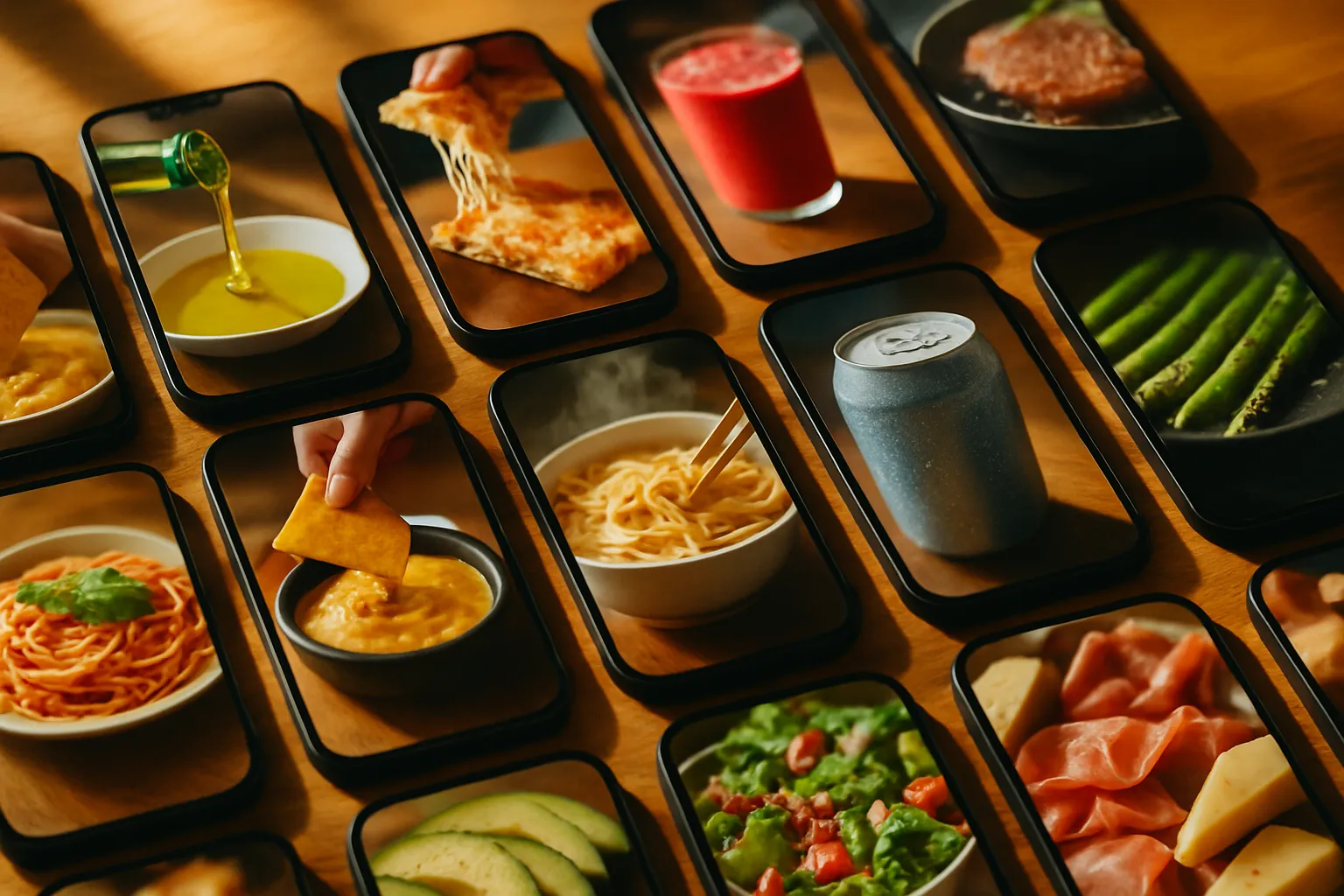
Food UGC is not a person holding a product. It is a system of video formats, each doing a growth job. Here is the format library, mapped to channels and the funnel.
11 min readFor brands
Food UGC Strategy
Creative fatigue in food ads: why UGC video libraries need rotation rules
Food ads fatigue fast: same hero shot, same hook, softening ROAS. Here is a rotation system for your UGC video library that keeps evergreen feeling new.
9 min readFor brands
Grocery & Pantry
Why specialty food brands need product-in-context UGC
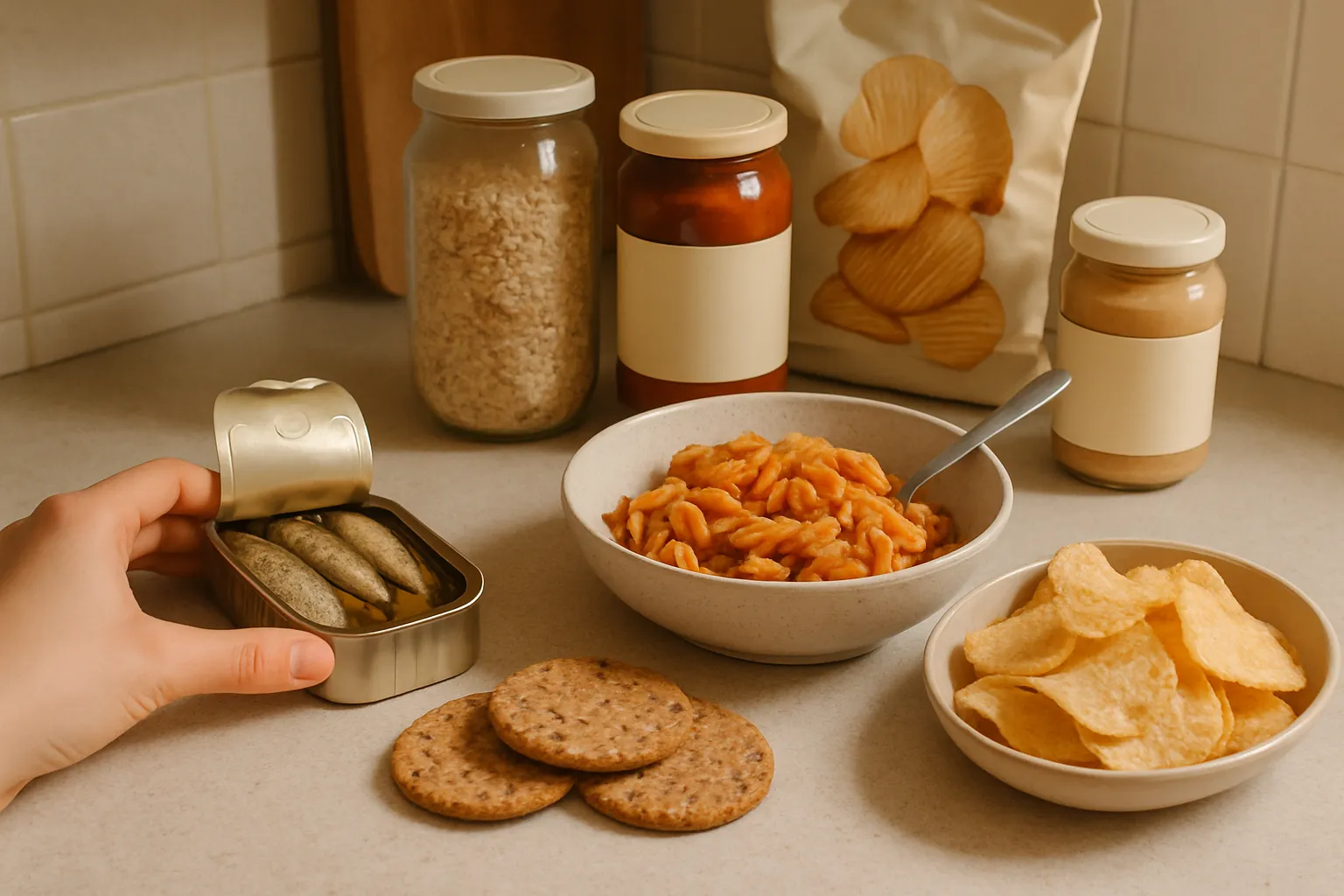
For pantry staples, tinned fish, sauces, snacks, and condiments, context often matters more than polish.
7 min readFor brands
Brands: source food-first UGC
Tell us what you need and we'll help identify creator fits by category, format, style, platform, and usage.