Food UGC Strategy
Creative fatigue in food ads: why UGC video libraries need rotation rules
Pantry Social Studio · June 27, 2026 · 9 min read
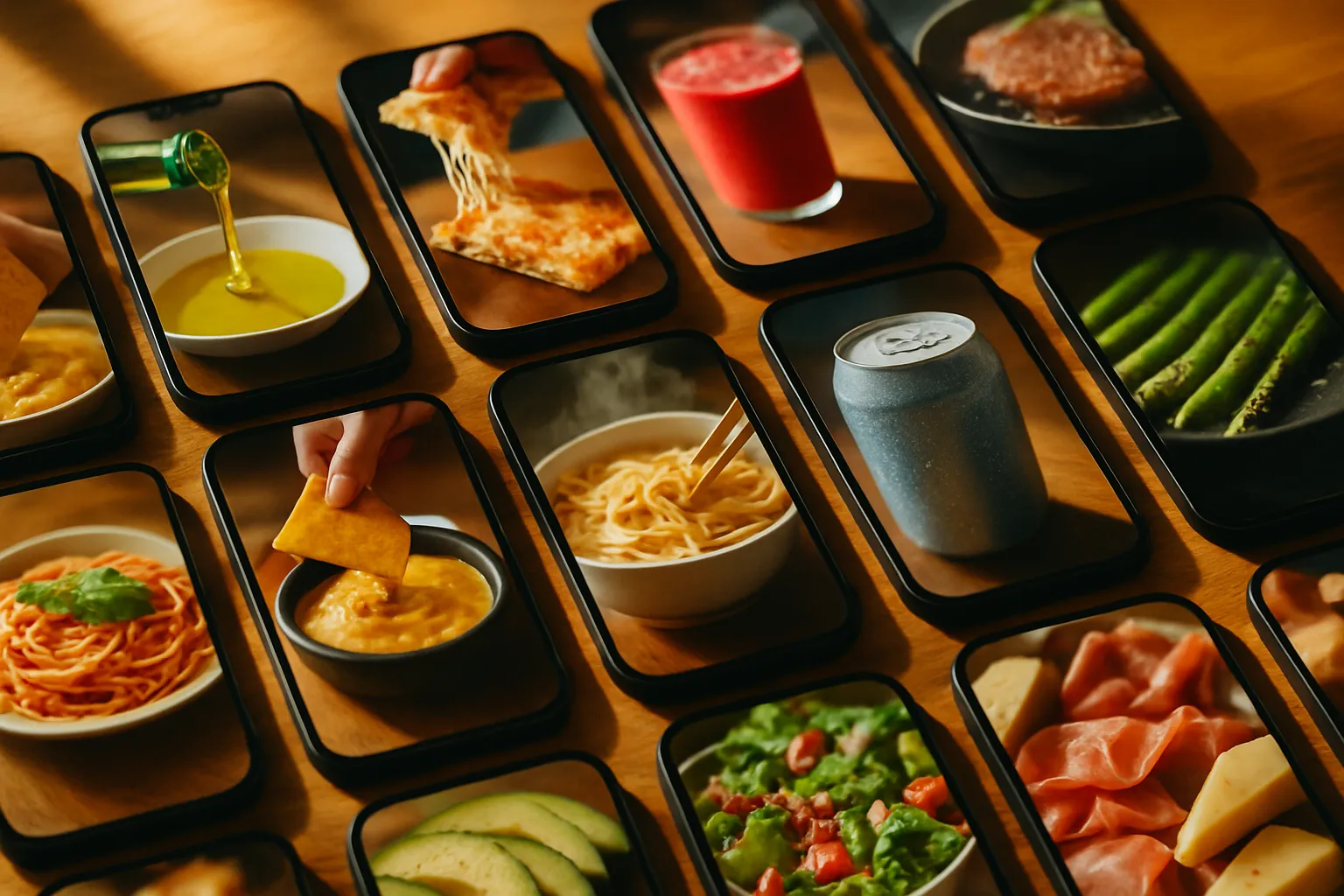
You beat creative fatigue by manufacturing a repeatable system of fresh formats and rotating creators, not by hunting for one lucky winner.
Your best-performing food ad is dying and the dashboard is being polite about it. It does not crash. It drifts. Cost per acquisition climbs a little each week, ROAS softens, and the winner you have been leaning on since launch quietly stops scaling. You raise the budget and nothing happens, or worse, efficiency gets uglier. Most growth marketers read this as a bidding problem or a landing page problem. Usually it is a creative problem wearing a costume. The ad that printed money in March is the same ad your audience has now seen nine times, and appetite does not survive repetition. This is creative fatigue, and food brands feel it faster and sharper than almost anyone. The fix is not a better single ad. The fix is a system that manufactures fresh food creative on a schedule, so no one asset has to carry the account alone.
What creative fatigue actually is
Creative fatigue is what happens when your audience has seen an ad enough times that it stops working on them. The pixels are identical, but the response decays. In a paid social account it is rarely one dramatic drop. It is a slow bleed across a few metrics at once. Frequency creeps up because you are serving the same people the same asset again and again. Click-through rate on your hero ad softens because the first frame no longer stops the scroll, people already know what comes next. Cost per acquisition rises to compensate, and blended metrics like MER start to sag even though nothing about the product, the offer, or the funnel changed. The account did not break. The creative got old. And because platforms optimize toward whatever is already winning, a fatiguing account often looks stable right up until it does not, which is exactly why it sneaks past teams watching topline spend instead of creative-level signals.
Why food ads fatigue in specific ways
General ad fatigue advice assumes a wide, complicated product story. Food is the opposite: the consideration set is small and the decision is fast. Someone decides whether they want your sauce, your snack, or your drink in about the time it takes to feel hungry. That speed is a gift on the first impression and a liability on the tenth. There is only so much room to reinterpret a single jar of chili crisp before the brain files it as seen already.
The repeated hero shot problem
Food creative leans hard on a small number of money shots: the pour, the pull, the first bite, the pack shot. Those beats work because they trigger appetite appeal directly. But they are also the most repeated frames in your account, which means they fatigue first. When every ad opens on the same glossy cheese pull, the third view lands with less force than the first, and by the tenth it is wallpaper. The sensory beat that made the ad is the same beat that wears it out. You need many different sensory entry points into the same product, not one perfect one on a loop.
Seasonal craving shifts move the target
Food demand is not flat across the year. Craving is seasonal, contextual, and weather-driven. The iced version of your drink that crushed in July feels wrong in January. The cozy, steaming, hands-around-a-mug framing that converts in winter reads as heavy in spring. This is a second fatigue vector that most categories do not have: even creative that has not been overexposed can go stale simply because the craving it was built around moved on. A rotation system has to account for the calendar, not just impression counts, which is why briefing seasonal angles ahead of the shift matters. More on that in seasonal moments to brief early.
Is your creative fatiguing? A diagnostic checklist
Before you build a system, confirm you actually have a fatigue problem and not a targeting or offer problem. Fatigue shows up at the creative level, so look there, not just at the account topline. Run this checklist against your top ads over a rolling two to three week window:
- Frequency on your top ad is climbing week over week and now sits above the point where the same people are seeing it repeatedly.
- Hook rate or three-second view rate is decaying: the first frame is stopping fewer people than it did at launch.
- CPA on a specific ad is drifting up while the offer, audience, and landing page are unchanged.
- ROAS at the ad level is softening even though the account still looks fine on topline spend.
- Your best asset stops scaling: you add budget and get more spend but not proportionally more conversions.
- New-customer share is slipping, a sign you are recycling the same creative to the same warm pool instead of reaching fresh people.
- Comments and saves taper off on an ad that used to earn them, an early qualitative tell before the metrics fully turn.
- Every winning ad in the account opens on the same shot, format, or creator, meaning you have concentration risk, not a library.
Why hunting for one winner is a losing strategy
The instinct when an ad fatigues is to go find the next home run. Test twenty things, wait for one to pop, ride it until it dies, repeat. That model has two problems. First, it is slow: you are always reacting after the decay has already cost you efficiency. Second, it is fragile: your entire account rests on one asset, so when it fatigues, you have no bench. The brands that stay efficient do not treat winners as lucky lightning strikes. They treat fresh creative as inventory they manufacture on a schedule. The goal is not to find one great food ad. It is to build a machine that produces many good ones in known formats, so there is always a fresh asset ready before the current one wears out. That is the difference between a lucky quarter and a durable account.
Build a UGC video library organized by format and angle
The foundation of a rotation system is a UGC video library that is structured, not a folder of random clips. Structure means every asset is tagged by two things: its format (the shape of the video) and its angle (the reason to buy it is arguing). When your library is organized this way, you can see your coverage at a glance, spot where you are thin, and rotate deliberately instead of guessing. A simple starting structure for a food brand looks like this:
- Formats: recipe or usage demo, taste test and reaction, haul or restock, day-in-the-life integration, before-and-after or transformation, founder or origin story, review or testimonial montage.
- Angles: taste and texture, convenience and speed, health or ingredient story, price and value, occasion (breakfast, late-night, hosting), better-than-the-alternative comparison.
- Creators: tag every asset by creator so you can rotate faces and not just formats, and see who resonates with which angle.
- Hooks: log the first three seconds of each asset separately so you can swap hooks without reshooting the whole video.
Formats and angles do different jobs
The reason to separate format from angle is that they fatigue independently and they map to different growth jobs. A taste-test format and a recipe format can both carry a texture angle, but they reach the viewer differently, so rotating format keeps the same message feeling new. Angle is where you connect creative to the business: a convenience angle tends to pull in busy new customers, a comparison angle helps you win switchers from an incumbent, an occasion angle expands usage among people who already buy. Mapping creative to growth jobs this way is how you keep new-customer acquisition healthy instead of just re-selling your existing buyers. If you want a deeper build on matching format to intent, the CPG creative testing menu breaks it down, and the food UGC format chooser helps you pick the shape for a given moment.
A rotation cadence model
A library only beats fatigue if you actually refresh it on a rhythm. Cadence should be driven by signal, not by a random calendar reminder, but you still want default guardrails so nothing sits too long. Use rolling windows and let the fatigue signals above trigger action. A workable default cadence for a food brand running steady paid social:
- Weekly: check frequency and hook rate on top ads. Any asset with climbing frequency and a decaying first frame gets a hook variant queued.
- Every two to three weeks: introduce at least one net-new format or angle into the active set so the top of your account is never all the same shape.
- Monthly: rotate creators. Swap in fresh faces on your proven formats so the message stays but the messenger changes.
- Quarterly: audit the whole library for coverage gaps by format and angle, and retire assets that have fully fatigued rather than pausing and re-launching them.
- Seasonally: brief and shoot the next craving window before it arrives, so winter-to-spring or summer transitions are covered in advance, not scrambled after ROAS drops.
Hook variants: cheap freshness on proven bodies
The fastest, cheapest way to refresh a fatiguing ad is to swap its opening, not its whole self. A large share of a food ad's stopping power lives in the first three seconds: the shot, the on-screen question, the sound, the pace. If the body of the video still communicates the product well but the hook has gone stale from overexposure, you can cut three or four new openings onto the same body and effectively reset the first-frame decay. This is why you log hooks separately in the library. One well-produced usage demo can spawn a taste-first hook, a price hook, a problem-first hook, and a curiosity hook, giving you four distinct-feeling assets from one shoot. Manufacturing variants beats manufacturing whole new winners from scratch every time.
Creator rotation keeps the account from looking like one person
Even great creator content fatigues when it is always the same face. Audiences pattern-match quickly, and a single recognizable creator across your whole account starts to feel like a spokesperson rather than a peer showing you food they like. Rotating creators does two things: it refreshes the visual signal so the scroll-stop resets, and it broadens reach, since different creators pull in slightly different pockets of new customers. A healthy food account has a stable of creators mapped across formats and angles, so you can pull a fresh face for any job. This is exactly the kind of creator-led video system that keeps sensory proof coming from many credible sources instead of one. Sensory proof in food UGC goes deeper on why that credibility matters for food specifically.
Treat evergreen as a perpetual product launch
The phrase evergreen fools people into thinking set-and-forget. In a fatiguing channel, evergreen has to mean perpetually renewed, not permanently running. The mental model that works: treat your always-on food creative like an ongoing product launch that never ends. A launch has energy, new angles, new faces, a reason to look again. If every few weeks your account gets a genuinely new format, a fresh creator, or a new angle on the same product, the audience keeps encountering something that feels like news even though the product has not changed. That is how evergreen still feels new. You are not re-running one ad forever, you are running a launch content system on a loop, and the loop is what protects your efficiency.
How this connects to CAC, MER, and new customers
Creative is not a brand-team nicety sitting off to the side of the growth model. It is one of the most direct levers you have on efficiency. When creative fatigues, frequency rises and you pay more to reach the same people, which pushes blended CAC up and drags MER down without anyone touching the media plan. When you keep a rotation of fresh formats and new creators flowing, you reach further into cold audiences, which is where new-customer acquisition actually comes from, and you hold hook rates up so you are not overpaying for attention. None of this is a guarantee that video sells product on its own, the offer, the price, and the experience all still have to hold. But creative is the lever that decides how efficiently your dollars turn into reach and attention, and a rotation system is how you keep that lever from rusting. Foundationally, this is why UGC for food brands works as a growth engine and not just a content exercise.
Work with Pantry Social Studio
Pantry Social Studio builds creator-led video systems for food, beverage, grocery, wellness, and CPG brands, structured exactly for the rotation model in this piece. We manufacture UGC video libraries organized by format and angle, rotate creators on a cadence, and keep your always-on set feeling like a launch instead of a rerun, so your account has a bench and not a single fragile winner. If your best food ad has quietly stopped scaling and frequency is climbing, book a creative fatigue audit and we will map your library gaps, set a refresh cadence, and build the paid-social-ready assets to fill them.
Frequently asked questions
What is creative fatigue in food advertising?
Creative fatigue is when your audience has seen an ad enough times that it stops working, even though nothing about the ad changed. In a food account it shows up as rising frequency, a decaying hook rate on your hero shot, climbing CPA, and softening ROAS, often while topline spend still looks stable. It is a creative problem, not a bidding or landing-page problem, and it hits food brands fast because the consideration set is small and appetite does not survive repetition.
Why do food ads fatigue faster than other categories?
Two reasons. First, food creative leans on a handful of money shots like the pour, the pull, and the first bite, so those beats get repeated constantly and wear out first. Second, craving is seasonal and contextual, so even creative that has not been overexposed can go stale when the craving it was built around shifts with the weather or the calendar. That gives food a second fatigue vector most categories do not have.
How do I know if my creative is fatiguing versus a targeting problem?
Look at the creative level, not the account topline. Fatigue signals include climbing frequency on your top ad, a decaying three-second view rate, CPA drifting up while the offer and audience are unchanged, your best asset failing to scale when you add budget, and slipping new-customer share. If those signals cluster on specific ads rather than across the whole account, you are looking at creative fatigue rather than a targeting or offer issue.
How often should I refresh food ad creative?
Let signals drive it, with guardrails. A workable default: check frequency and hook rate weekly and queue hook variants for decaying ads, introduce a net-new format or angle every two to three weeks, rotate creators monthly, audit the full library quarterly, and brief seasonal angles before the craving window arrives. The point is to have a fresh asset ready before the current one fully fatigues.
Why not just find one great ad and run it?
Because one winner is fragile and hunting for it is slow. If your whole account rests on a single asset, you have no bench when it fatigues, and you are always reacting after the decay has already cost you efficiency. The durable approach is to manufacture fresh creative in known formats on a schedule, rotating hooks and creators, so no single ad has to carry the account and there is always a fresh option ready to go.
Written by the Pantry Social Studio team — a food-first UGC and creator studio working with grocery, snack, beverage, pantry, kitchen, and CPG brands. We brief and produce creator content for organic and paid social.
Related Pantry Notes
Food UGC Strategy
UGC for food brands: video formats that actually move product on shelves and online
Food UGC is not a person holding a product. It is a system of video formats, each doing a growth job. Here is the format library, mapped to channels and the funnel.
11 min readFor brands
Food UGC Strategy
Sensory proof: the missing layer in food UGC and CPG ads
Appetite appeal is not decoration. It is the proof mechanism that earns the first three seconds, holds watch time, and builds belief before purchase.
9 min readFor brands
Food UGC Strategy
A simple creative testing menu for CPG brands
A practical menu of hooks, formats, creator archetypes, and product moments brands can test across paid and organic channels.
7 min readFor brands
Brands: source food-first UGC
Tell us what you need and we'll help identify creator fits by category, format, style, platform, and usage.