Creator Briefs
How to brief creators for snack reviews and pantry staples
Pantry Social Studio · June 4, 2026 · Updated June 23, 2026 · 7 min read
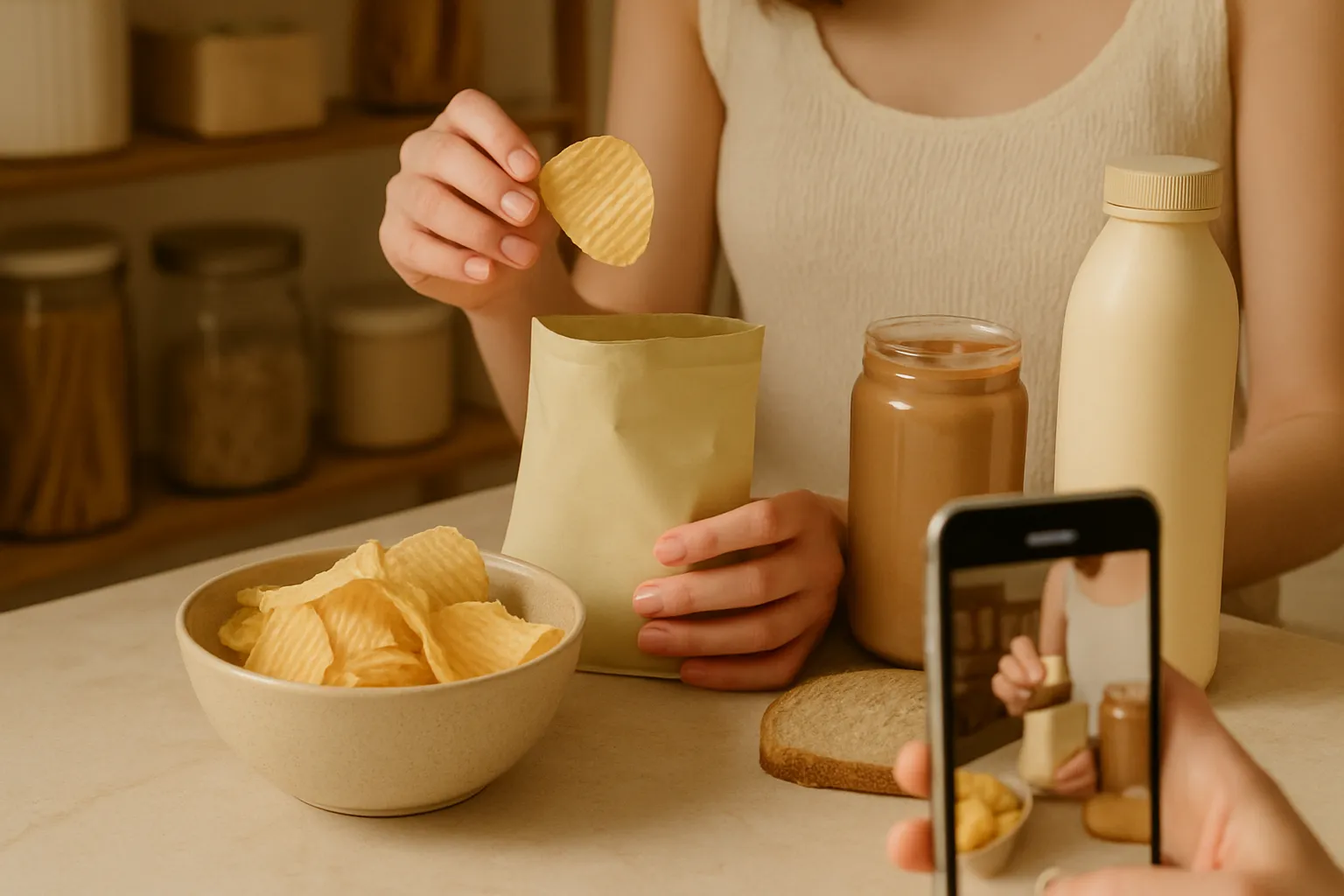
The best snack-review briefs give creators the taste, texture, and use-case cues they need to react honestly, then get out of the way. Specify the moment and the swap, not the lines.
If you want to know how to brief creators for snack reviews, the short answer is this: hand them the sensory and use-case context they need, name the one product moment that matters, and let the reaction be theirs. A snack review brief works when it tells a creator what to taste for, when to reach for the product, and what it replaces — without writing the words they say. That balance is the whole craft. Too loose and you get a pretty clip with no message. Too tight and you get a stiff, scripted ad that scrolls right past the people you paid to reach. This guide walks through what a strong food UGC brief includes for snacks and pantry staples, how to prompt taste, texture, and use case without dictating lines, and ends with a copy-paste skeleton you can adapt today.
Why snack and pantry briefs go wrong
Most weak snack-review briefs fail in one of two directions. The first is the empty brief — a product ships, a creator gets “make something fun,” and the result is a nice-looking video that never says why the snack is worth buying. The second is the over-scripted brief, where every sentence is written for the creator to read aloud. Both miss because a review lives or dies on credibility, and credibility comes from a real person reacting in their own words. When you script taste reactions, viewers feel the seams. The crunch sound lands a beat too late, the “wow” is flat, and the comment section says “ad” before the first cut ends. A good brief sits in the middle: it is specific about the message and the moment, and open about the language. Get that wrong and even strong creators turn in paid-ready creative that nobody believes.
What a strong snack-review brief includes
A reliable snack review brief covers the same ground every time, so creators are never guessing. Keep it to a single page they can scan on their phone. Include: - The product and the one thing it does best (the hero claim you actually want carried) - The audience and the platform, so pacing and format match where it runs - Taste, texture, and sound notes — what to bite into, what to listen for, what to call out - The use case: when and where someone reaches for this snack in real life - The swap: what this replaces in the pantry or the lunch routine - Must-haves: showing the package clearly, any required on-screen claims, allergen or disclosure language - Hard nos: claims they cannot make, competitor mentions, off-brand framing - Deliverables and usage: number of clips, aspect ratios, and the usage rights you need for paid That last line matters more than brands expect. If you plan to run the review as an ad, settle terms up front — our note on usage rights before production explains why locking rights early saves you a re-negotiation later.
Briefing taste, texture, and sound (without scripting it)
Snacks are sensory, so your brief should be too — but you prompt sensation, you do not script it. Instead of writing “say: this is the crunchiest chip ever,” give the creator the cue: “bite into it on camera; we want the crunch loud and the first reaction honest.” The difference is everything. One produces a line; the other produces a moment. Name the specific texture you want noticed — the snap of a cracker, the chew of a soft bar, the layered crunch of a coated nut — and let the creator find their own words for it. Do the same with sound. ASMR-style audio sells crunch and fizz better than any adjective, so tell them the mic should catch the open, the pour, or the bite. For taste, point them at the standout note (“the heat builds on the second chip”) rather than handing them a verdict. This is how taste and texture language stays believable: the brand supplies the focus, the creator supplies the voice. For more on matching this to the right edit style, see our food UGC format chooser.
Briefing the use case and the swap
A snack review that only shows someone eating is half a review. The other half is context: when does this snack fit into a real day, and what does it beat? Brief the use case as a concrete moment — the 3pm desk slump, the post-gym refuel, the lunchbox add, the late-night couch snack. A specific moment gives the creator a scene to build around and gives viewers a reason to picture themselves buying it. Then brief the swap. Every pantry purchase replaces something, so tell the creator what this stands in for: the candy bar it beats on protein, the chips it edges out on cleaner ingredients, the takeout it makes unnecessary. Naming the swap turns a taste reaction into a buying argument. If you want this product shown in a genuine setting rather than a styled flat-lay, our piece on product in context covers how real use beats staged perfection for food UGC.
How to avoid the “scripted ad” read
The fastest way to kill a snack review is to make it sound rehearsed. A few habits keep it honest. First, brief outcomes, not lines: tell the creator what idea to land, not the exact words to land it. Second, allow one genuine flaw or caveat — a creator who says “it is a little messy, but worth it” reads far truer than one who claims perfection. Third, open in the creator's own voice; the first three seconds decide whether viewers stay, and a real human beat outperforms a brand slogan every time, as we cover in organic vs paid first three seconds. Finally, resist the urge to pile on claims. One clear message, delivered believably, will outsell a clip stuffed with every benefit you have. Trust the creator you chose; you are paying for their credibility, so let it carry the work.
Pantry staples vs snacks: how the brief differs
Snacks and pantry staples are not briefed the same way, and treating them identically dilutes both. A snack is an impulse and an experience, so the brief leans into the moment — the bite, the crave, the reach. The hero is the reaction. A pantry staple is a repeat-purchase utility — a sauce, an oil, a baking mix, a stock — so the brief leans into versatility and trust. The hero is the use: how it shows up across meals, how it earns a permanent shelf spot, how it simplifies a weeknight. For staples, prompt the creator to show the product working inside a recipe or routine, not just tasted in isolation, and to speak to consistency and value, not novelty. The taste, texture, and use case framing still applies; you just shift the weight. A snack brief asks “would you grab this again right now?” A staple brief asks “would you keep buying this for months?” For staples especially, repeatable short-form formats help, which we break down in pantry products in short form.
A copy-paste snack-review brief skeleton
Adapt this skeleton into your next creator brief and fill in the blanks. Keep it to one page: - Product: [name, flavor, size] - Hero message: [the one thing this does best] - Audience and platform: [who, where it runs] - Taste and texture cues: [what to bite, what to notice, what sound to catch] - Use-case moment: [the specific real-life occasion] - The swap: [what this replaces and why it wins] - Must-show: [package shot, required claims, disclosure] - Hard nos: [claims and comparisons to avoid] - Tone: [honest and in your own words; outcomes, not a script] - Deliverables: [clip count, aspect ratios, length] - Usage rights: [organic, paid, term, channels] If you want a deeper field-by-field version, our snack brand UGC brief checklist expands each line into prompts you can lift directly.
Brief it once, get it right
A snack review brief does not need to be long — it needs to be specific where it counts and open where it should be. Give creators the taste, texture, and use-case cues, name the swap, set your must-haves and usage rights, and then trust the voice you hired. That is how you get food-first UGC that reads honest and runs paid-ready. If you would rather not build the brief alone, tell us what you need and we will scope creators, prompts, and deliverables around your snack or pantry product.
Frequently asked questions
How detailed should a snack review brief be?
Keep it to one scannable page. Be specific about the hero message, the taste and texture cues, the use-case moment, and the swap, and be clear on must-haves and usage rights. Leave the actual wording to the creator so the reaction reads honest rather than scripted.
How do I brief taste and texture without scripting the creator?
Prompt the sensation, not the sentence. Tell the creator what to bite into, what texture to notice, and what sound to catch on the mic, then let them find their own words. “Bite it on camera, we want the crunch loud” works; “say this is the crunchiest chip ever” does not.
What is the difference between briefing a snack and a pantry staple?
A snack brief leans into the moment and the crave, so the hero is the reaction. A pantry staple brief leans into versatility, value, and repeat use, so the hero is how the product works across meals and routines. Same taste, texture, and use-case framing, different emphasis.
Should I include usage rights in the creative brief?
Yes. If you plan to run the review as paid creative, settle rights, term, and channels in the brief before production. Locking it early prevents an awkward re-negotiation after the clip is delivered.
Why does the swap matter in a snack review?
Naming what the snack replaces turns a taste reaction into a buying argument. When a creator shows the product beating the candy bar on protein or the takeout on convenience, viewers get a concrete reason to switch, not just a nice clip of someone eating.
Written by the Pantry Social Studio team — a food-first UGC and creator studio working with grocery, snack, beverage, pantry, kitchen, and CPG brands. We brief and produce creator content for organic and paid social.
Related Pantry Notes
Creator Briefs
What snack brands should include in every UGC brief
A practical checklist for briefing snack reviews, taste tests, desk lunches, pantry restocks, and paid-social product demos.
5 min readFor brands
Usage Rights
How food brands should think about usage rights before production
A plain-English guide to organic usage, paid usage, whitelisting, creator licensing, and why terms should be discussed upfront.
8 min readFor brands
Creative Formats
Taste test, haul, restock: which food UGC format should you use?
How to choose between creator reactions, grocery hauls, pantry restocks, product demos, and comparison videos.
6 min readFor brands
Brands: source food-first UGC
Tell us what you need and we'll help identify creator fits by category, format, style, platform, and usage.