Food UGC Strategy
UGC Creator vs Influencer: What’s the Difference for Brands and Creators?
Pantry Social Studio · June 18, 2026 · 6 min read
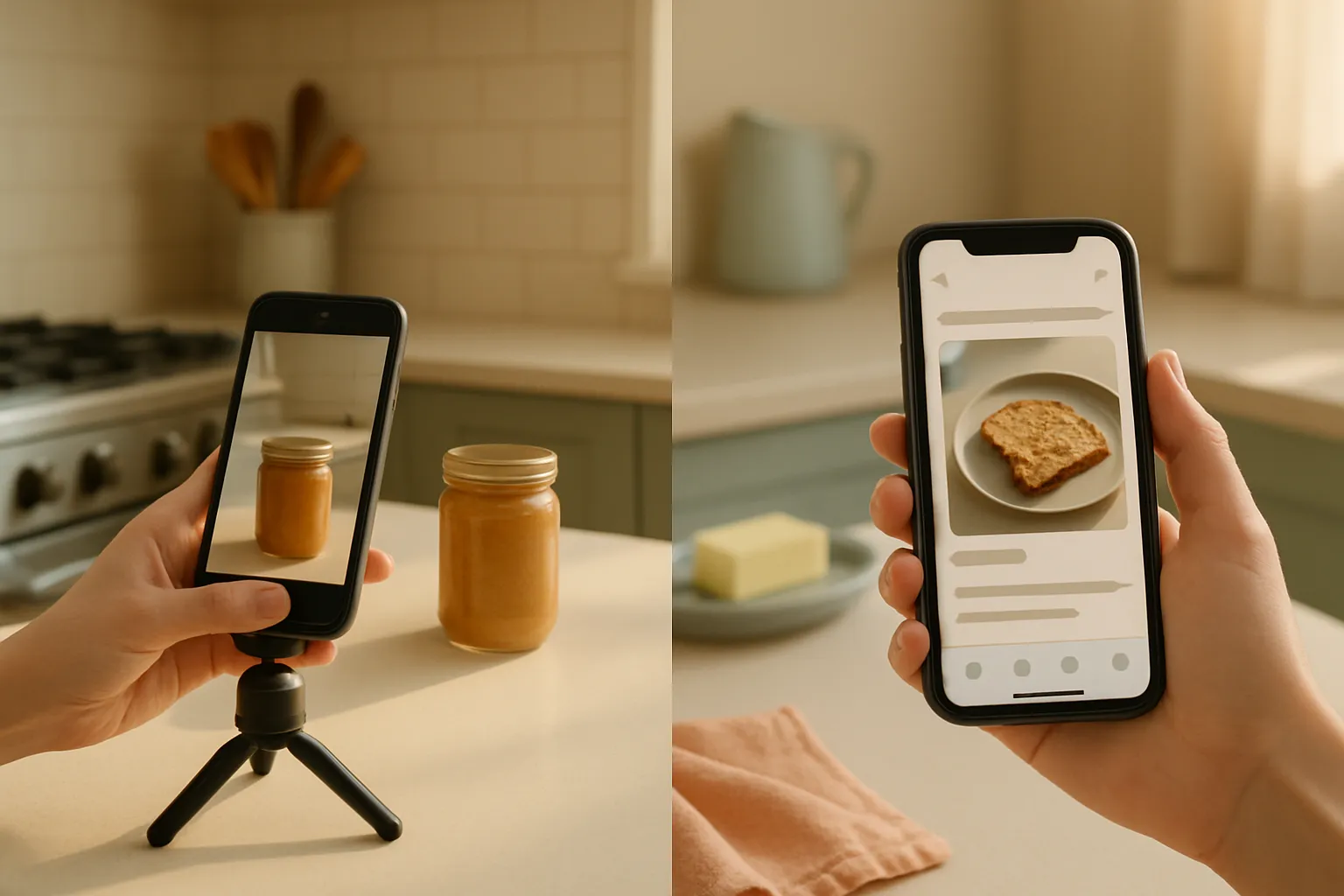
A UGC creator makes content the brand owns and runs as paid-ready creative; an influencer lends their own audience for reach. Many food brands need the first more than the second.
The ugc creator vs influencer question comes up on almost every food brand call, usually because the two roles get blended into one line item. They are not the same job. A UGC creator produces content the brand owns and runs across organic and paid social, while an influencer distributes content to their own followers. Knowing which you actually need, before you write a single brand brief, saves budget and avoids a common mismatch: paying for reach when what you needed was paid-ready creative.
Simple definitions of each
A ugc content creator is hired to make content, not to broadcast it. The brand receives the raw and edited files and decides where they run. An influencer is hired for distribution; the value sits in their audience and the trust they have built with it. One is a content service, the other is a media placement. Both can be excellent, and the difference is mostly about what you are buying.
- UGC creator: produces food-first content the brand owns and can run as ads or organic posts.
- Influencer: posts to their own following, lending reach and credibility to their audience.
- Overlap exists, but the deliverable and the rights attached to it are what separate them.
The main difference: content vs audience
The cleanest way to think about it is content versus audience. When you hire a UGC creator, you are buying assets and usage rights. When you hire an influencer, you are buying access to people. A UGC creator might have a few hundred followers or none that matter to the deal, because their feed is not the point. An influencer’s feed is the entire point. This is why a ugc creator and an influencer can charge very differently for what looks like a similar video: you are paying for two different things.
When a brand should hire a UGC creator
Hire a UGC creator when you need a steady supply of authentic-feeling food content to test and scale. This is the right call when paid social is doing the heavy lifting and you need fresh hooks, formats, and angles to keep ad accounts from fatiguing. It is also ideal for product pages, email, and organic feeds where you want volume and control without renting someone’s audience.
- You are running paid ads and need new creative variations regularly.
- You want to own the footage and reuse it across channels indefinitely.
- You need product-in-context shots: the food being made, served, and eaten.
- You care more about conversion-ready creative than a one-time spike in reach.
When a brand should hire an influencer
Hire an influencer when reach and association are the goal. If you are launching in a new market, want a credible voice to vouch for the product, or need awareness among a specific community, an influencer’s audience is the asset. The trade-off is control and longevity: the post lives on their page, usage is often limited to a window, and you are paying partly for the relationship they have with their followers rather than for files you keep forever.
When to use both
The strongest food programs rarely pick one. A common pattern is to use influencers for the moment, then UGC creators for the machine. Influencers drive a burst of awareness around a launch or seasonal push; UGC creators supply the ongoing creator content that fuels paid social long after the launch noise fades. You can also repurpose: an influencer’s organic post can inspire angles you brief out to UGC creators as paid-ready creative, so the reach play feeds the always-on engine.
Why food, grocery, and CPG brands often need product-in-context content
Food is a sensory category, and most of its selling power lives in moments a studio shot cannot fake: the pour, the sizzle, the first bite, the jar already half-used on a real counter. That is why so many food, grocery, and CPG brands lean toward product-in-context content rather than reach alone. A polished influencer post can build awareness, but a library of honest, appetite-driving clips is what convinces a shopper to add to cart. When the product needs to be shown working in a real kitchen, content volume usually matters more than follower count.
Examples by format
Both UGC creators and influencers can shoot similar formats; the difference is who owns and runs the result. Here are common food-first formats, with more in our food UGC examples library.
- Taste test: an unscripted first reaction to flavor and texture.
- Demo: a clear how-to-use clip, from package to plate.
- Recipe integration: the product folded into a real recipe a viewer would actually make.
- Pantry haul or restock: the product shown in context among everyday groceries.
- Before and after: the difference the product makes to a dish or routine.
Which is right for you?
If you are a brand, start from the job to be done. Need owned, paid-ready creative at volume? That is a UGC creator. Need a trusted voice to reach a specific audience? That is an influencer. Often you want both, sequenced. When you are ready to build a steady content engine, you can work with creators and brief the formats your funnel actually needs. If you are a creator, the good news is the door is open either way: you do not need a huge following to make excellent product-in-context content brands will pay for. If filming food is your strength, you can apply to the roster and focus on craft. To sharpen that craft, our guide on how to become a UGC creator walks through the first steps.
Frequently asked questions
What is the difference between a UGC creator and an influencer?
A UGC creator is hired to produce content the brand owns and can run as ads or organic posts. An influencer is hired to post to their own audience for reach. One sells content and rights; the other sells distribution and trust with their followers.
Do UGC creators post on their own pages?
Usually no. A UGC creator delivers files to the brand, which decides where they run. Some creators also post, but that is a separate, optional arrangement, not the core of the work.
Which is better for food brands, UGC or influencers?
Neither is universally better. Food brands that rely on paid social and product pages often need UGC creators for owned, product-in-context content at volume. Influencers are better when the goal is awareness or credibility within a specific audience. Many brands use both.
Can someone be both a UGC creator and an influencer?
Yes. Plenty of people do client UGC work and also post sponsored content to their own following. They are simply offering two different services, often priced and contracted separately.
Do UGC creators need followers?
No. A UGC creator is paid for the quality of their content and the rights they grant, not their audience size. Strong food-first filming and editing matter far more than follower count.
Written by the Pantry Social Studio team — a food-first UGC and creator studio working with grocery, snack, beverage, pantry, kitchen, and CPG brands. We brief and produce creator content for organic and paid social.
Related Pantry Notes
Creator Education
What Is a UGC Creator? Meaning, Examples, and How Brands Use UGC
A clear, food-first explanation of what a UGC creator is, how the role differs from influencers, and why grocery and CPG brands rely on creator content.
7 min readFor creators
Food UGC Strategy
How to Find UGC Creators for Food, Grocery, and CPG Brands
A practical guide to where food, grocery, and CPG brands can find UGC creators, plus what to evaluate before you brief one.
7 min readFor brands
Creative Formats
Food UGC Examples: Formats Grocery and CPG Brands Can Actually Use
A practical tour of food UGC examples — taste tests, recipe integrations, grocery hauls, pantry restocks, demos, and paid hooks — and what each one actually sells.
7 min readFor brands
Need food-first UGC for your next launch?
Tell us what you're building, or apply to create food-first content — we'll help identify creator fits by category, format, platform, and usage.