Creator Education
What Is a UGC Creator? Meaning, Examples, and How Brands Use UGC
Pantry Social Studio · June 23, 2026 · 7 min read
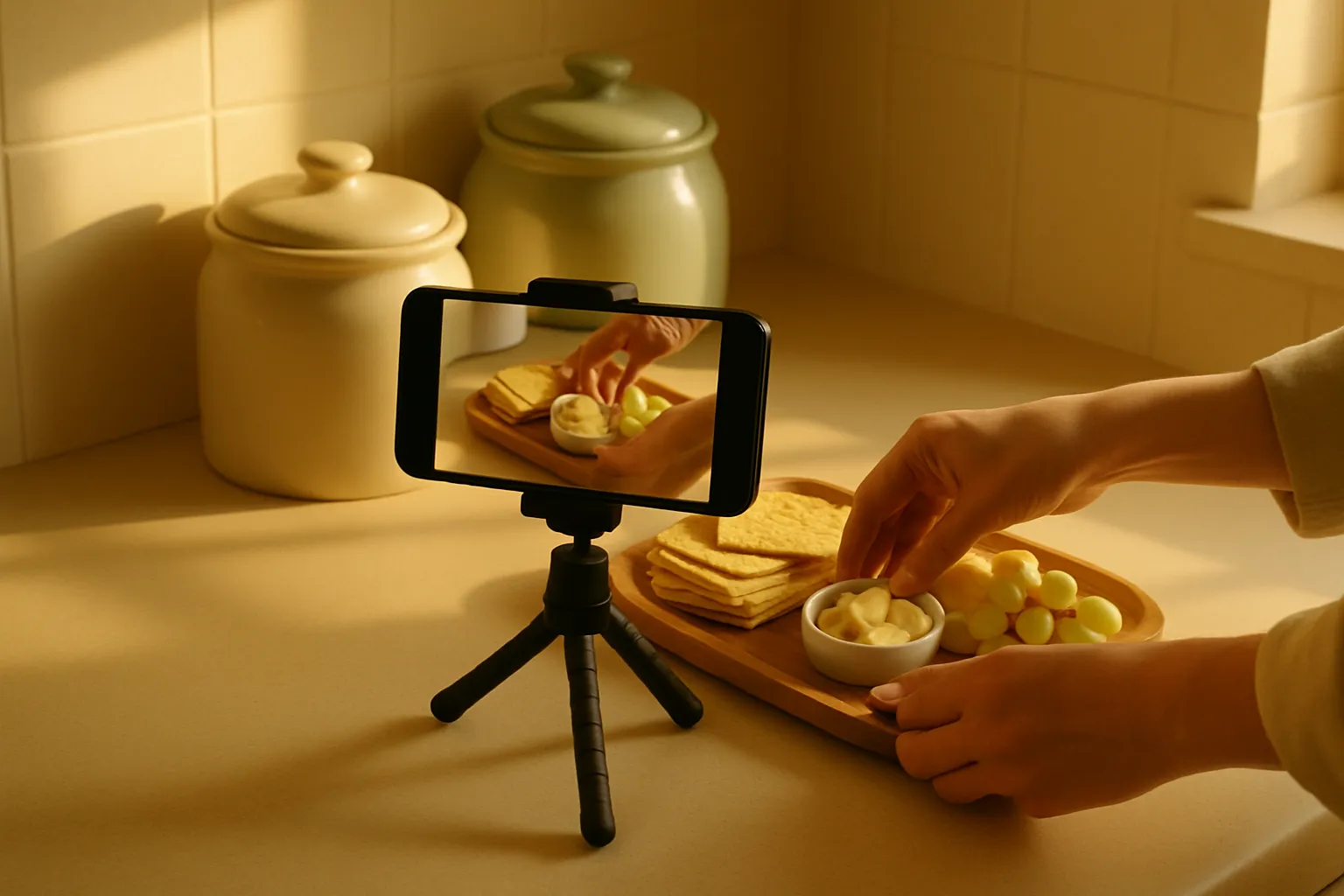
A UGC creator makes brief-ready, product-in-context content brands can post and run as ads — the value is content quality and clarity, not follower count.
If you have ever wondered what is a UGC creator, the short answer is someone who makes content for a brand to use as its own — not someone who needs a big audience to be worth hiring. In food and grocery especially, the job is to film a product in a real kitchen, capture taste, texture, and use case, and hand the brand paid-ready creative it can post organically or run as an ad. The skill is in the craft, not the clout.
What is a UGC creator?
A UGC creator is a person who produces user-generated-style content on behalf of a brand under a brand brief. Unlike content a customer posts spontaneously, this is commissioned and delivered as files — vertical video, photos, voiceover — that the brand owns the rights to use. For a sauce or snack brand, that usually means a short clip that looks like a real person genuinely using the product, shot well enough to live on organic and paid social.
UGC creator meaning in plain English
The simplest ugc creator meaning is this: you are a freelance content maker hired to film a product as if you discovered it in your own pantry. The ugc creator definition does not include managing a public following or chasing virality — that is a separate job. When people ask what does ugc creator mean, the honest answer is that it describes a deliverable, not a fame level: you produce clean, on-brief footage and the brand decides where it runs.
What does a UGC creator actually make?
Most food-first UGC creators deliver short-form vertical video built for the way people actually scroll. The raw materials are simple but specific: a clear hook, product-in-context shots, and language that conveys taste and texture so a viewer can almost feel the crunch or the pour. A typical handoff includes a few of these pieces so the brand can mix and match across placements.
- Vertical video in 9:16, usually 15 to 45 seconds, with a strong opening hook
- Clean product-in-context shots in a real kitchen or pantry setting
- Optional voiceover or on-camera talking that follows the brand brief
- Hero stills the brand can repurpose for organic and paid social
- Multiple angles or hooks from one shoot so the brand can test variations
UGC creator vs influencer
The clearest way to understand the role is by contrast. An influencer sells access to their audience; a UGC creator sells the content itself, which the brand then distributes on its own channels. That is why a UGC creator does not need followers — the work travels on the brand’s account, not yours. We go deeper on the trade-offs in UGC creator vs influencer, but the headline is that one is a media buy and the other is a production service.
UGC creator vs content creator
A content creator is a broad term for anyone who makes content, often for their own platforms and their own voice. A ugc content creator is narrower: you make content for someone else to publish, shaped by their brief and brand guidelines. The mindset shift matters — you are not building a personal brand here, you are solving a brand’s creative problem with footage they can use and re-use across campaigns.
Why brands hire UGC creators
Brands hire creators because polished studio ads often read as ads, while well-made creator content reads as a recommendation. For food and CPG, that authenticity directly affects whether someone stops scrolling and considers a purchase. Creator content is also faster and more flexible than a full production: a brand can brief several creators, get varied angles, and feed paid-ready creative into testing without booking a set. If you want the buyer’s side of this, see how to find UGC creators and the economics in UGC creator rates.
Why food and grocery UGC is its own category
Food is harder to shoot than most categories, and that difficulty is exactly where good creators earn their keep. A snack has to look crave-able, a beverage has to pour with the right light catching the glass, and a frozen meal has to read as appetizing in seconds. It also demands real kitchen context — believable counters, believable hands, believable use cases — plus taste and texture language that generic creators rarely nail. That specificity is why brief-ready food creators are worth more than a bigger generalist following.
Examples of food UGC formats
Food-first UGC is not one thing — it is a toolkit of repeatable formats a brand can brief depending on the product and the goal. Here are the formats that show up most often in grocery and CPG work, and you can see them in practice in our food UGC examples.
- Taste test — honest first-bite reaction with clear taste and texture language
- Recipe integration — the product used as one step in a real dish
- Grocery haul — the product shown in the context of a wider shop
- Pantry restock — the product slotted into an everyday kitchen routine
- Product demo — a simple how-to-use walkthrough, start to finish
- Comparison — the product set against a familiar alternative
- Beverage pour — slow, well-lit pour shots that sell refreshment
- Kitchen appliance demo — the product shown working with a common tool
How Pantry Social Studio evaluates creators
We evaluate the work, not the follower count. When we review a submission we are looking at lighting, audio, framing, and whether you can describe taste, texture, and use case in a way that makes a viewer hungry. Brief adherence is just as important — can you take a brand brief and deliver what was actually asked for — along with basic usage-rights awareness so brands can run your footage as paid-ready creative without surprises. If you have a few strong food clips that prove the craft, you can apply to the roster; if you are still building one, start with how to become a UGC creator and a focused UGC creator portfolio.
Frequently asked questions
What does UGC creator mean?
UGC creator means a person hired to produce user-generated-style content for a brand to use as its own. You deliver footage and photos — usually short-form vertical video of a product in a real setting — and the brand owns the rights to post or advertise it. It describes a deliverable, not a level of fame.
Do UGC creators need followers?
No. UGC creators are paid for the content they produce, not for access to an audience, because the brand publishes the work on its own channels. What matters is content quality: lighting, audio, clear product-in-context shots, and the ability to follow a brief.
Is a UGC creator the same as an influencer?
No. An influencer sells distribution through their own following, while a UGC creator sells the content itself for the brand to distribute. They can overlap, but they are different jobs with different deliverables and different reasons a brand would hire you.
What kind of content do UGC creators make?
Mostly short-form vertical video and supporting stills built for organic and paid social. In food and grocery that means formats like taste tests, recipe integrations, product demos, and beverage pours — all shot to convey taste, texture, and real use case.
Can food creators apply to Pantry Social Studio?
Yes. Pantry Social Studio recruits food, grocery, kitchen, pantry, beverage, snack, and CPG creators to its roster, and we judge applications on the work rather than follower count. If you have a few strong food clips, you can apply to the roster at /apply.
Written by the Pantry Social Studio team — a food-first UGC and creator studio working with grocery, snack, beverage, pantry, kitchen, and CPG brands. We brief and produce creator content for organic and paid social.
Related Pantry Notes

Creator Education
How to Become a UGC Creator in 2026, Even With 0 Followers
A practical, food-first playbook for becoming a UGC creator from scratch — building a starter portfolio, filming sample videos, finding jobs, setting rates, and applying to studios and rosters.
8 min readFor creators
Food UGC Strategy
UGC Creator vs Influencer: What’s the Difference for Brands and Creators?
UGC creators make content brands own and run as ads; influencers lend reach to their own audience. Here’s when food brands should hire each, and where creators fit.
6 min readFor creators & brands
Creator Jobs
UGC Creator Jobs: Where to Find Paid UGC Work and How to Pitch
A practical guide to finding UGC creator jobs, learning where food and grocery brands look for creators, and pitching yourself for paid, brief-ready work.
7 min readFor creators
Food creators: apply to join the pantry roster
Share your socials, portfolio, niches, rates, and availability to be considered for future food, grocery, kitchen, beverage, pantry, and CPG briefs.